










Almost 40% of Caucasian adults in Georgia experience at least one sunburn each year, and health officials say sunburn is a significant risk factor for the development of skin cancer. The rate of new melanoma diagnoses—responsible for 75% of all skin cancer deaths—is 13% higher in Georgia than the national average, and that statistic is even higher for white females than males.
Dr. Nicholas Von Der Ahe, with Atrium Health Floyd Primary Care Family Medicine says, “Some people associate being tan with being healthy. That is not the case. What we call a good tan can actually be a sign that your skin has been damaged. That is why you should find a way to keep as much as your skin covered as possible when you are outside during the day.”
Your likelihood of over-exposure is greater during 10 a.m. to 4 p.m. But be aware that you are also affected by UV rays when it is cloudy and cool. UV rays are also reflected off water, so being by the pool doesn’t protect you.
“Overexposure to UV rays leads to most types of skin cancers, and the sun is not the only contributor. Sunlamps and tanning beds can also be bad for your skin,” said Dr. Von Der Ahe.
It is recommended that people take the following preventative steps to protect their skin from too much UV exposure and to lower skin cancer risk:
- Stay in the shade as much as possible, under an umbrella, tree or other shelter.
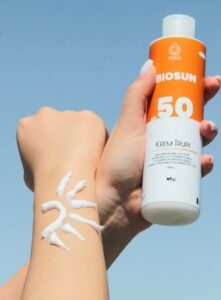
- Use sunscreen and wear protective clothing when you’re outside, even if you’re in the shade. Sunscreen with a SPF of 30 or higher should be applied in a thick layer on all exposed skin. The higher the SPF, the more protection the sunscreen offers. Be sure to reapply at least every two hours and after swimming, sweating or toweling off. The use of sunscreen is not recommended for babies under 6 months old. The U.S. Food and Drug Administration recommends that infants be dressed in protective clothing and kept in the shade.
- Wear a hat that has a brim that shades your face, ears and the back of your neck. If you wear a baseball cap, protect your ears and the back of your neck with clothing, sunscreen or by staying in the shade.
- Wear sunglasses to protect your eyes from UV rays and reduce the risk of cataracts. They also protect the skin around your eyes from sun exposure. Sunglasses that block both UVA and UVB rays offer the best protection. Wrap-around styles block UV rays from coming in from the side.
Skin cancer is the most common type of cancer in the U.S. More than 4.3 million adults are treated for skin cancer each year, according to the Centers for Disease Control and Prevention (CDC).
Comments