










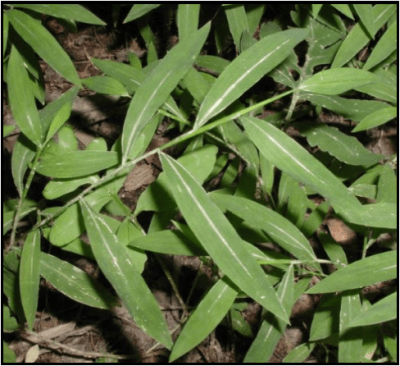
An aggressive invasive plant, Japanese stiltgrass (Microstegium vimineum), is rapidly colonizing moist, shaded woodlands and floodplains across Georgia, particularly in the state’s northwest region. This silent invader poses a significant threat to local biodiversity, outcompeting native vegetation and disrupting delicate forest ecosystems. Experts are urging early detection and removal to prevent its widespread dominance.
Native to Asia and accidentally introduced to the U.S., Japanese stiltgrass – also known as Nepalese browntop – has become a widespread problem throughout the Southeast. Its sprawling, drooping habit allows it to form dense mats, effectively smothering indigenous groundcover and tree seedlings.
Not only does it aggressively out compete native flora ion Northwest Georgia for light and nutrients, but it thrives in areas where deer have already decimated native under story plants, making it even harder for our ecosystems to recover.
The plant’s rapid spread is fueled by the large amounts of seed it produces, which can remain viable in the soil for up to five years. This allows it to quickly infest a variety of areas, from moist woodlands and roadsides to ditches and even residential lawns and gardens. Left unchecked, it can lead to a significant loss of biodiversity and fundamentally alter forest understories.
How to Identify This Green Invader:
Early identification is crucial for effective control. Georgia residents should look for the following characteristics:
Nodding, Droopy Habit: The grass often appears to sprawl or flop over.
Long, Asymmetrical, Slightly Hairy Leaves: The leaves are distinctly uneven in shape and may have fine hairs.
Distinctive Silver-Pearlescent Line: A unique, shiny silver stripe runs along the mid-vein of each leaf, a key identifier.
What You Can Do to Combat the Spread:
For homeowners and land managers, proactive control measures are critical, especially before the plant produces its prolific seeds in late summer.
- Hand-Pull Small Infestations: For smaller patches, hand-pulling plants before they produce seeds is effective. Ensure the entire root system is removed.
- Remove Seedheads: If hand-pulling isn’t feasible, mowing or string-trimming can manage growth and remove seedheads, but proper disposal is essential to prevent further spread.
- Use Appropriate Herbicides: For larger infestations, targeted application of appropriate herbicides like glyphosate can be effective, particularly before the plants flower. Always follow label instructions carefully.
- Prevent Further Spread: Seeds can cling to clothing, shoes, vehicles, and equipment. It is crucial to clean items thoroughly after traversing infested areas to avoid inadvertently spreading the plant to new locations.
- Learn and Report: Educate yourself and others on how to identify Japanese stiltgrass. Report any new or significant infestations to local extension offices or invasive species reporting systems to help track and manage its presence.
Combating this pervasive invader requires a community-wide effort to protect Georgia’s natural heritage for future generations. Early detection and swift action are the most potent weapons against Japanese stiltgrass.
Comments