










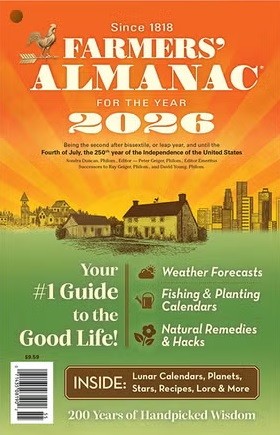
For over two centuries, its distinctive yellow cover has been a familiar sight in general stores, farmhouses, and homes across America, offering a blend of weather predictions, gardening advice, and homespun wisdom. Now, the Farmers’ Almanac, a publication deeply woven into the fabric of American rural life, has announced it will cease operations with its 2026 edition, citing insurmountable financial challenges in the contemporary media landscape.
The final print issue, the 2026 edition, is already available for purchase, marking the poignant end of an era for the publication founded in 1818. This venerable institution has weathered countless storms, both meteorological and economic, but the current media environment, characterized by declining newsstand sales and shifting consumer habits, has proven to be a challenge it can no longer overcome.
“The decision to cease publication was not made lightly,” stated a representative for the Farmers’ Almanac. “We have explored every avenue, but the economic realities of producing and distributing a print almanac in today’s world have become increasingly difficult. The landscape for print media has changed dramatically, and unfortunately, we can no longer sustain operations.”
Alongside the discontinuation of the print edition, the Farmers’ Almanac’s online presence, including its website and social media accounts, will also be phased out. Readers will be able to access existing online content through December 2025.
Founded by David Young, the Farmers’ Almanac quickly became a trusted resource for farmers seeking to plan their planting and harvesting based on its famously long-range weather forecasts. Over its more than 200-year history, it expanded its offerings to include a wide range of practical advice, from recipes and home remedies to astronomical data and fascinating trivia. Its unique blend of practical utility and engaging content resonated with generations of readers, making it more than just a publication, but a cultural touchstone.
It is important to note that this closure pertains specifically to the Farmers’ Almanac and is distinct from its well-known counterpart, the Old Farmer’s Almanac, which continues to be published. Despite the shared name, the two publications have always operated independently.
The cessation of the Farmers’ Almanac leaves a void in the media landscape, particularly for those who have relied on its unique brand of information and tradition. As the final 2026 edition makes its way to readers, it serves as a bittersweet farewell to a publication that has guided American farmers and households through changing seasons for over two centuries.
Comments