






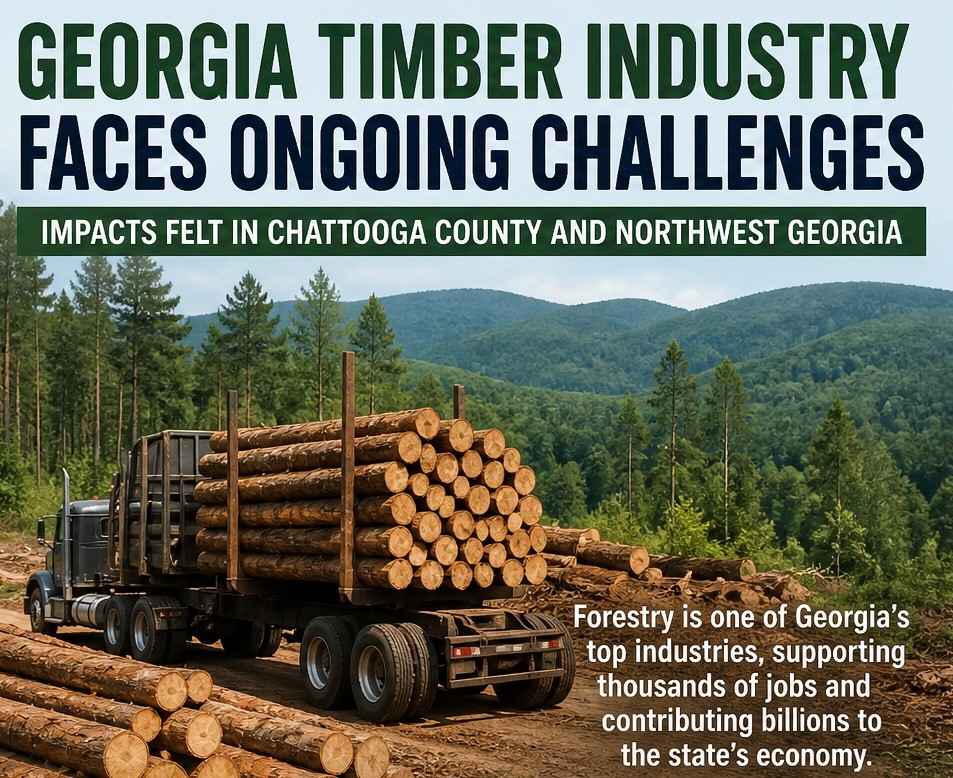
Georgia’s timber industry, long considered one of the state’s economic backbones, is facing a growing list of challenges that are also being felt locally in Chattooga County and across Northwest Georgia.
Forestry remains one of Georgia’s top industries, supporting thousands of jobs and contributing billions to the state’s economy. In rural areas like Chattooga County, timber harvesting, logging, and related services play a key role in supporting landowners and small businesses.
However, industry leaders say a combination of economic pressure, environmental concerns, and workforce shortages is creating uncertainty.
One of the biggest challenges continues to be fluctuating timber prices. Demand for lumber surged during the pandemic housing boom, but prices have since stabilized, leaving some landowners seeing lower returns on harvested timber.
In Chattooga County, where many families rely on timber as a long-term investment, those shifts can directly impact household income and land management decisions.
Labor shortages are also affecting logging operations. Fewer workers are entering the field, making it harder for companies to maintain production levels. Rising equipment and fuel costs have added additional strain on smaller logging operations throughout Northwest Georgia.
Environmental factors are another concern. Severe weather, including storms and drought conditions, can damage timber stands and delay harvests. At the same time, increasing attention on sustainability and water quality—especially related to industrial activity in the region—has placed additional scrutiny on forestry practices.
Transportation and supply chain issues have also made it more difficult to move timber efficiently, particularly for mills and processors that rely on steady deliveries.
Despite these challenges, forestry experts say the long-term outlook remains stable, with continued demand for wood products and ongoing efforts to improve forest management practices.
Local leaders in Northwest Georgia continue to emphasize the importance of supporting the timber industry, noting its role in preserving working forests, protecting rural economies, and maintaining the region’s natural landscape.
Comments