










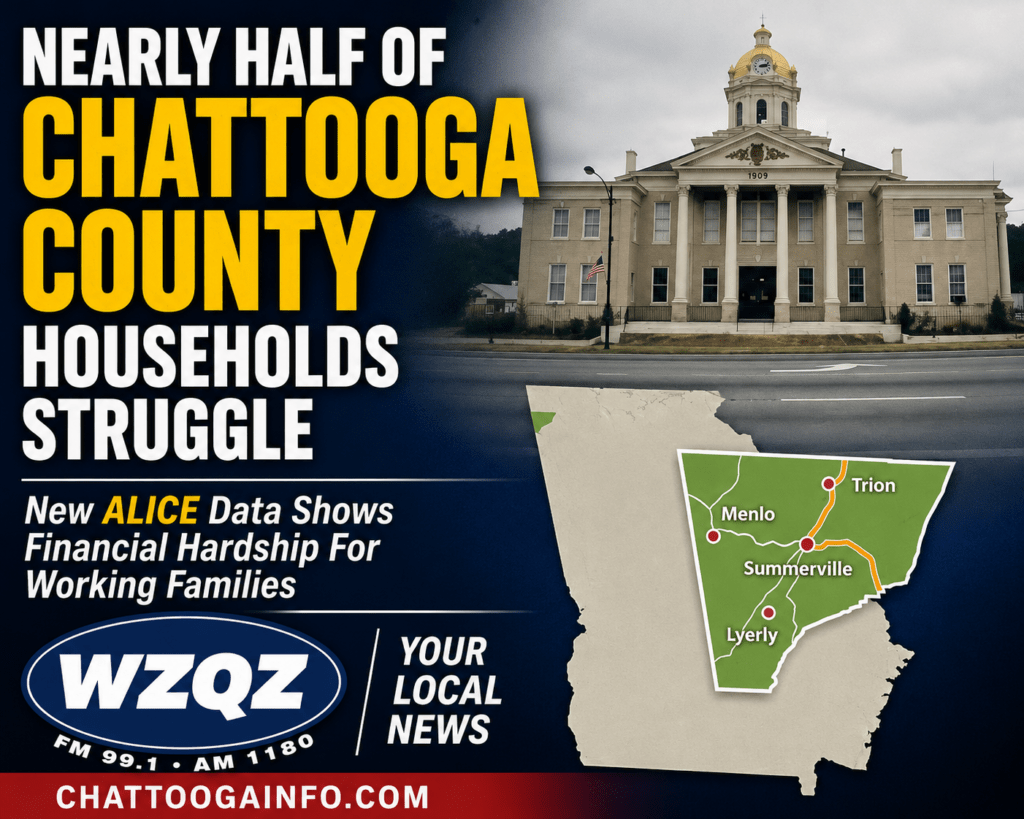
A newly released report from United For ALICE paints a sobering picture of financial hardship in Chattooga County, showing that many local families are struggling to make ends meet despite being employed.
The ALICE report — which stands for Asset Limited, Income Constrained, Employed — measures households that earn above the federal poverty level but still do not make enough to cover basic necessities such as housing, food, transportation, health care, child care, and technology.
According to the latest Georgia ALICE report, nearly half of Georgia households fall below the ALICE Threshold, meaning they either live in poverty or earn too little to afford the basic cost of living. Statewide, 45 percent of households were below that threshold in 2023.
The county-level data for Chattooga County shows a similar trend, with a significant portion of local households falling below the income needed to meet basic expenses. The report notes that traditional poverty statistics often fail to capture the full extent of financial hardship because many families earn too much to qualify as impoverished but still cannot afford everyday necessities.
United For ALICE researchers say rising costs continue to outpace wages for many workers. The group’s Household Survival Budget estimates that basic living expenses for a family of four in Georgia can exceed $77,000 annually, while many common occupations pay substantially less than what is needed to cover those costs.
The report highlights workers in jobs that are essential to local communities, including retail employees, food service workers, health care aides, child care providers, and others who often earn above the poverty line but remain financially vulnerable.
United For ALICE says its research is intended to provide a more accurate picture of financial challenges facing communities by looking beyond traditional poverty measures and examining the true cost of household essentials. The organization publishes county-level data across Georgia to help policymakers, community organizations, and local leaders better understand economic conditions in their communities.
Comments