






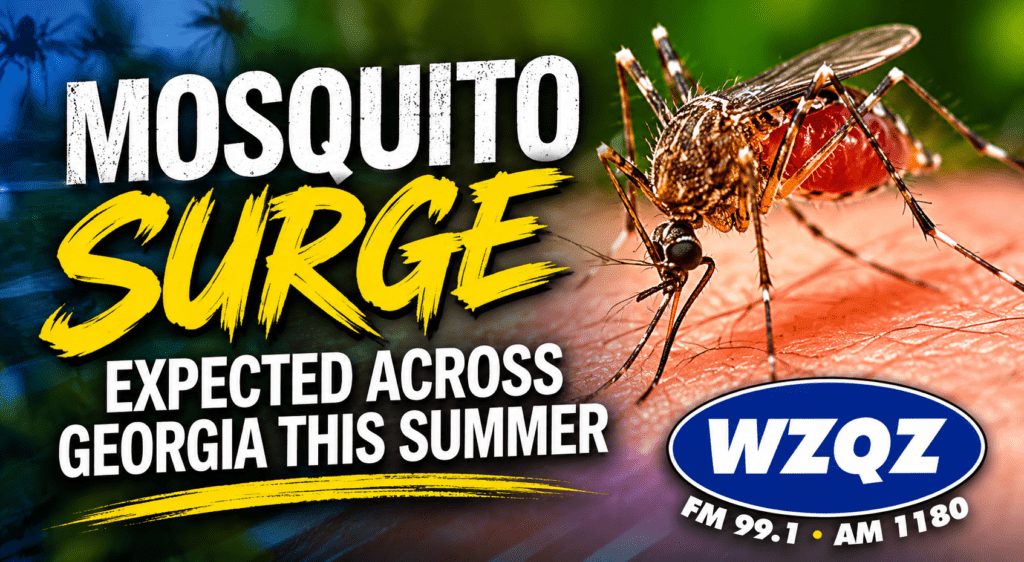
Public health officials are urging Northwest Georgia residents to take precautions against mosquito bites as the 2026 West Nile virus season gets underway earlier and more aggressively than it has in more than two decades.
Dr. Gary Voccio, health director for the Georgia Department of Public Health’s Northwest Health District, said officials are concerned about how the season may develop over the coming weeks.
As of July 7, the Centers for Disease Control and Prevention had reported 56 human cases of West Nile virus across 15 states. No human cases had been reported in Georgia, but the virus had been detected in mosquitoes in Fulton and Chatham counties.
The CDC previously said the country was experiencing its earliest West Nile virus season since 2004, with case totals well above the average normally reported by the end of June.
West Nile virus is primarily spread to people through the bite of an infected mosquito. Mosquitoes become infected after feeding on infected birds and can then transmit the virus when biting humans. The virus is not spread through casual contact with another person or by handling birds.
Health officials are encouraging residents to follow the “Five Ds of Prevention”:
Dusk and Dawn: Limit outdoor activity during these times, when mosquitoes carrying West Nile virus are often most active.
Dress: Wear loose-fitting, long-sleeved shirts, long pants and socks to reduce exposed skin.
DEET: Use an EPA-registered insect repellent containing DEET, Picaridin, IR3535 or Oil of Lemon Eucalyptus.
Drain: Empty containers that collect standing water, which can become mosquito breeding grounds.
Doors: Make sure doors and windows close tightly and repair torn or damaged screens.
Voccio said removing standing water is one of the most effective steps residents can take around their homes. Flowerpots, buckets, children’s toys, wading pools, old tires, bottles and cans should be emptied or removed after rainfall and at least once each week.
Residents should also keep gutters and roof eaves clear of leaves and debris that may trap stagnant water.
When using sunscreen and mosquito repellent together, health officials recommend applying sunscreen first and insect repellent afterward. Light-colored, loose-fitting clothing can also help reduce mosquito bites.
Symptoms of West Nile virus may develop three to 15 days after an infected mosquito bite and can include fever, headache, neck discomfort, muscle and joint pain, swollen lymph nodes and a rash.
Older adults, people with weakened immune systems and those with underlying medical conditions face a greater risk of developing serious complications.
Anyone with questions or symptoms should contact a healthcare provider or their local county health department. West Nile virus is the most commonly reported locally acquired mosquito-borne disease in Georgia.
Comments