






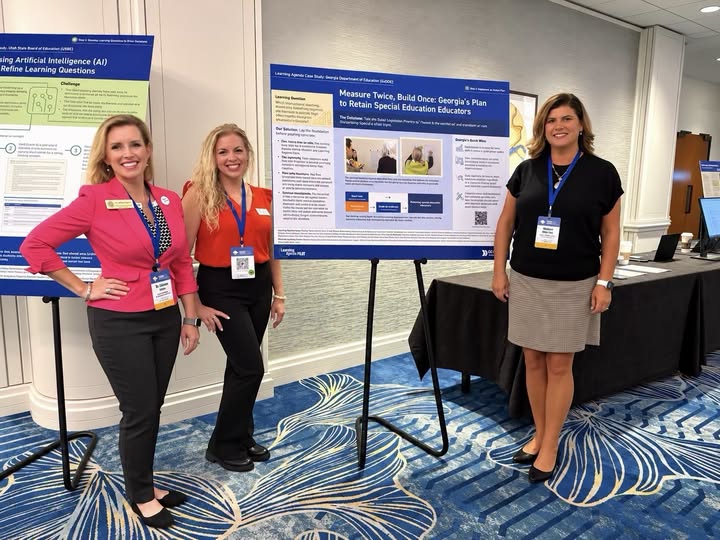
Georgia is one of just eight states that helped develop and test a new national education framework designed to help states determine which programs are working and where education resources can have the greatest impact on students.
The U.S. Department of Education released the new Learning Agenda Playbook last week after working with the Georgia Department of Education and education agencies in Arkansas, Idaho, Kansas, New Hampshire, Tennessee, Utah and Wisconsin.
Georgia didn’t simply endorse the finished product. GaDOE participated in developing, testing and refining the framework, and Georgia education officials were invited to Washington, D.C., to share their work and best practices with leaders from other states.
A Learning Agenda is essentially a multi-year process for determining what an education agency needs to know before making major decisions. The framework calls on states to identify their most pressing problems, determine what questions need to be answered, gather evidence about what works and then use those findings when deciding where programs and resources should be directed.
For Georgia, the work has already been applied to a significant issue facing schools across the state: retaining special education teachers.
The National Comprehensive Center’s case study of Georgia’s work is titled “Measure Twice, Build Once: Georgia’s Plan to Retain Special Education Educators.” Georgia used the Learning Agenda process to examine the issue and build evidence before determining how best to address special education teacher retention.
That gives the statewide initiative relevance for local school systems such as Chattooga County Schools and Trion City Schools, since decisions made by the Georgia Department of Education about programs, priorities and resources ultimately affect school districts throughout the state.
State School Superintendent Richard Woods said the goal is to avoid adding programs and administrative requirements simply for the sake of doing more. Woods said Georgia’s participation is helping the state build better systems and establish stronger connections with teachers, students, families and other stakeholders as the department implements its priorities.
The playbook includes tools for identifying priorities, determining gaps in existing knowledge, developing specific questions, gathering evidence and then using the findings to make decisions.
Federal education officials say the objective is not simply to collect more data, but to produce better evidence that states can use to determine what works and direct resources toward programs most likely to improve student outcomes.
Georgia’s participation comes as the state is also placing increased attention on the particular challenges facing rural schools. The Georgia Department of Education is holding its first Rural Education and Innovation Summit today, Wednesday, September 16, in Tifton, with a second summit scheduled September 30 in Young Harris. Those meetings will focus on literacy, special education, college and career readiness, educator workforce development, artificial intelligence and other issues affecting rural schools.
Comments