





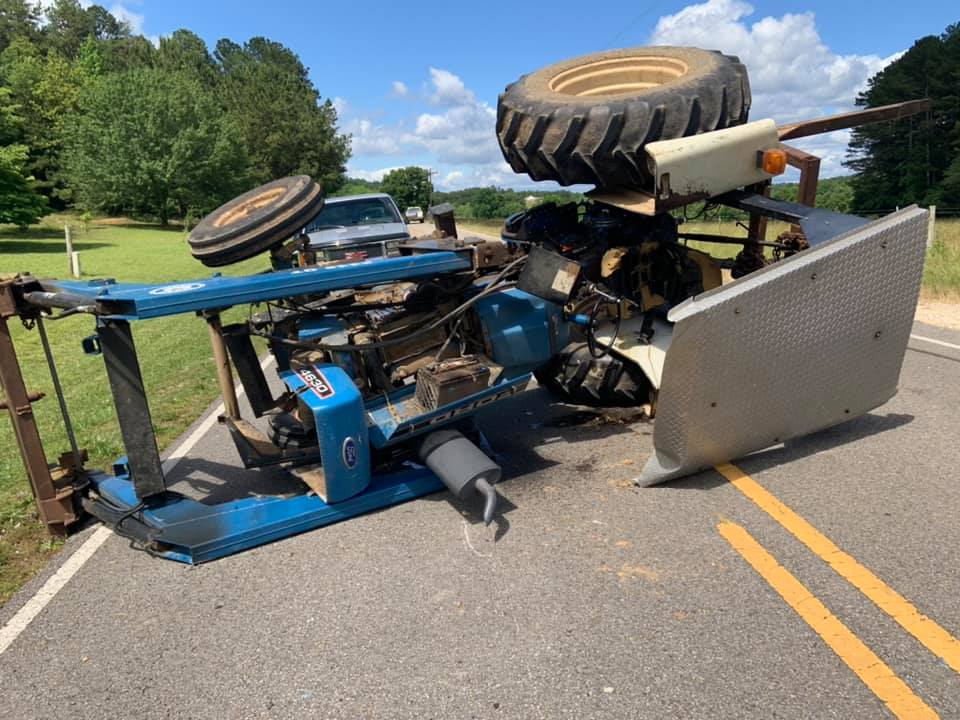
No one was injured in an accident on Saturday involving a farm tractor and a small pickup truck. Area resident Lane Bridges was driving the Ford farm tractor with his dad, Mike Bridges, following behind him in a truck. Mike Bridges was attempting to turn when another truck shot around Bridges’ pickup truck and struck the tractor that Lane Bridges was driving. The accident overturned the tractor and the passing pickup truck. Neither party was injured in the accident.
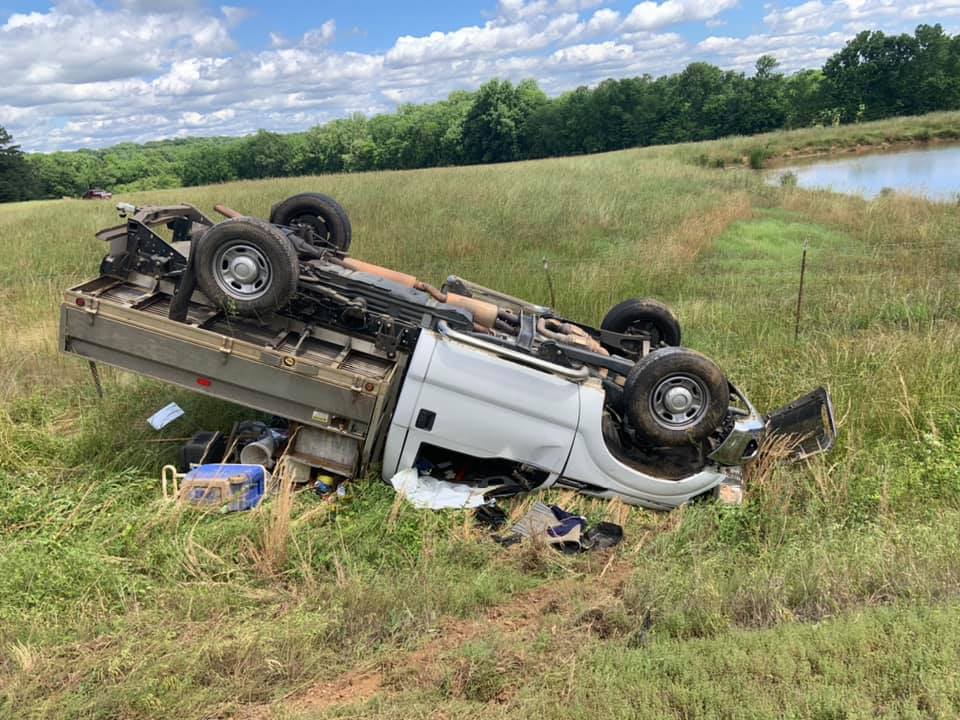
Accidents like this involving tractors and farm machinery often end in tragedy. Both drivers were fortunate that neither was injured, but area residents are reminded that in both Georgia and Alabama, it is legal for farm tractors and machinery to operate on public roadways.
The Georgia Governor’s Office of Highway Safety reminds motorists:
Drivers
- Be patient: Don’t assume that the farmer can always move aside to let you pass. Soft, damp or steep shoulders may not be able to support heavy farm equipment. The farmer will pull off the road at the first available safe location to allow you to pass. Even if you have to reduce your speed to 20 mph for two miles, your trip will only be extended by about six minutes.
- Yield to wide vehicles: Some farm equipment may be wider than the lane of travel. If you approach a piece of wide farm equipment traveling in the opposite direction and you cannot pass, pull off the road and stop, safely turn around or back up to a location that will allow the equipment to pass by.
- Pass with caution. If a farmer has pulled off the road to allow you to pass, or if the farmer cannot pull off the road and you feel you must pass, do so with caution.
- Be watchful of vehicles behind you that may also try to pass.
- If you must enter the oncoming lane of traffic, do not pass unless you can see clearly ahead of both you and the vehicle you will pass.
- If there are any curves or hills ahead that may block your view or the view of oncoming vehicles, do not pass.
- Do not pass if you are in a designated “No Passing Zone” or within 100 feet of any intersection, railroad grade crossing, bridge, elevated structure or tunnel.
- Do not assume that a farm vehicle that pulls to the right side of the road is going to turn right or is letting you pass. Due to the size of some farm implements, the farmer must execute wide left-hand turns. If you are unsure, check the operator’s hand signals and check the left side of the road for gates, driveways or any place a farm vehicle might turn.
Comments