










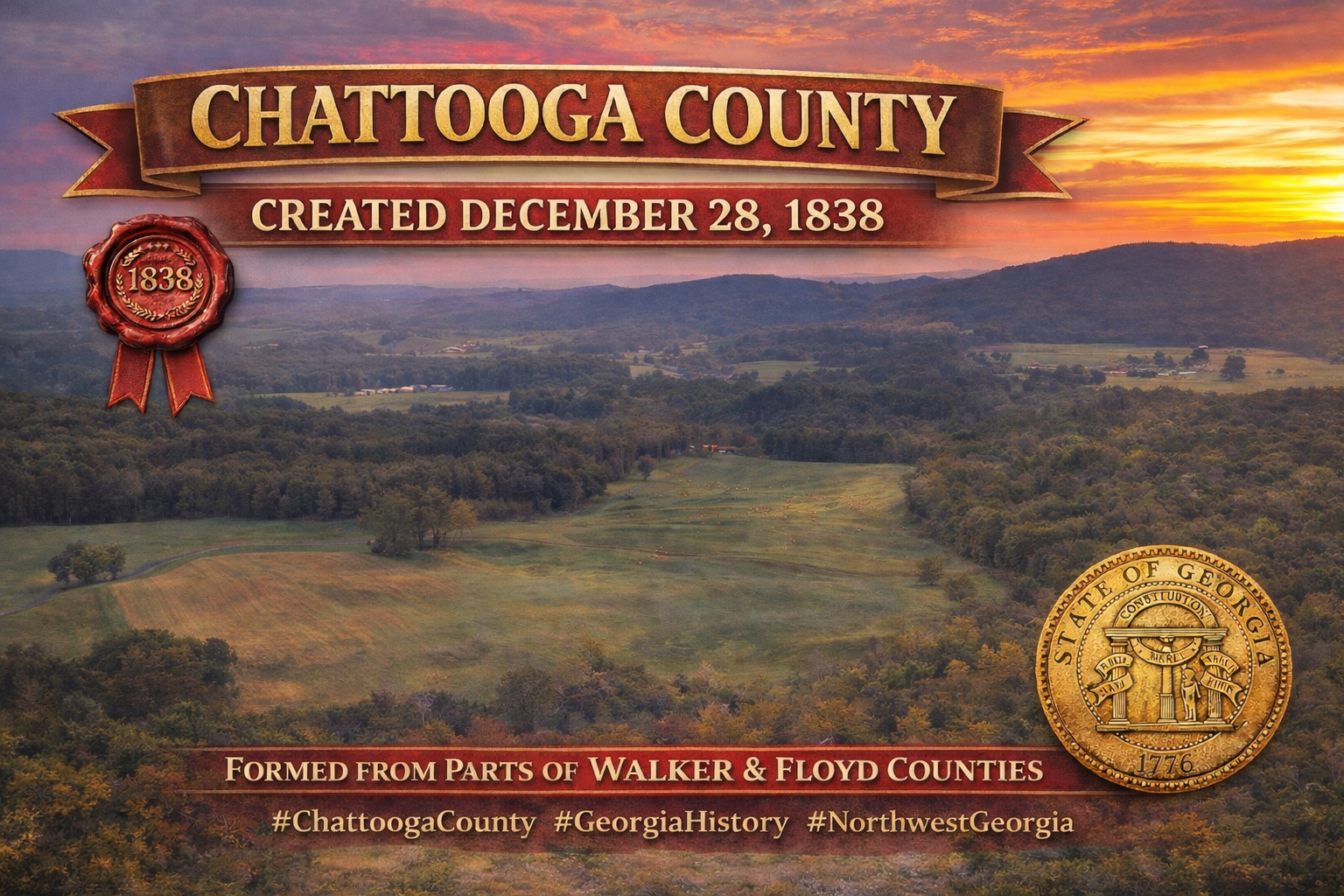
On December 28, 1838, the Georgia General Assembly officially created Chattooga County, carving it out of portions of Walker County and Floyd County to better serve a growing population in Northwest Georgia.
At the time, residents in the southern reaches of Walker County and the northern areas of Floyd County faced long, difficult trips to county seats for court proceedings, land records, tax payments, and other essential government business. As settlements spread across the valleys and ridges along the Chattooga River basin, state lawmakers recognized the need for a new county that would place local government closer to the people it served.
The new county was named Chattooga, a name rooted in Native American heritage and long associated with the river and region. Early communities quickly became the backbone of the county’s identity. Summerville emerged as the county seat, chosen for its central location and accessibility. Other small communities grew alongside farms, mills, churches, and crossroads stores, including Lyerly, Menlo, Trion, Chelsea, Teloga, Holland, Alpine, Berryton, Dirtseller, and Cloudland on Lookout Mountain.
Each of these communities played a role in shaping Chattooga County’s early economy and culture. Agriculture dominated much of the landscape, with cotton, corn, and livestock sustaining families for generations. Mill towns like Trion later helped drive industrial growth, while mountain and valley settlements maintained strong ties to land, faith, and family.
More than 185 years later, Chattooga County remains defined by its small towns, rural heritage, and close-knit communities. The county’s formation from Walker and Floyd counties was more than a boundary change—it marked the beginning of a shared local identity that continues to unite residents
Comments