






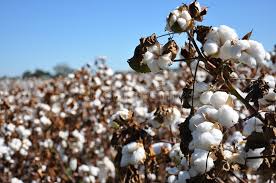
The UGA cotton research team identified 24 Georgia counties where the presence of cotton leafroll dwarf virus (CLRDV) has been confirmed from commercial fields and UGA research farms during 2018-19. While the virus has not been found in any Chattooga County cotton fields, neighboring Floyd County and Cherokee County, Alabama cotton farmers have seen the virus.
The aphids aren’t a direct threat to cotton plants, but they can carry a persistent virus that is difficult to control and can cause significant losses in one of Georgia’s most important crops.
First identified in Alabama in 2017, cotton leaf roll dwarf virus (CLRDV) — which causes leaf reddening, crinkling and curling, as well as deformation of cotton bolls — started spreading quickly. By 2019, it had been detected in every state of the cotton-producing region east of Texas, including Georgia. CLRDV is related to the virus that causes cotton blue disease (CBD), which has been endemic in cotton crops in Argentina and Brazil, causing yield losses up to 80%.
Since 2018, the researchers have tracked the virus extensively in Georgia cotton fields and have discovered that the virus is able to survive in harvested cotton stalks in the field over the winter. It is a common practice to leave cotton stalks in the field after harvest, then till them into the soil before the next season’s planting. But it appears to be time to rethink that practice according to UGA experts. They say the cotton stalks should be removed as soon as possible after harvest.
Comments