



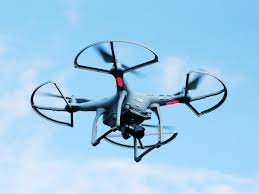
Drones are becoming one of the biggest contraband threats facing Georgia prisons—and Chattooga County has already seen how these drops can play out on the ground.
State corrections leaders warned this week that drones are now routinely used to deliver illegal items into facilities, including drugs—sometimes laced with fentanyl—as well as tools and other contraband. Corrections officials say they’ve even confiscated drones capable of lifting heavy loads. Investigators also say drone pilots may pay people who live near prisons thousands of dollars to use driveways or property as staging areas for flights.
At a hearing Monday about the budget for prisons, Tyrone Oliver, the commissioner for the state Department of Corrections, said drones have been used to drop drugs laced with fentanyl and other goods, including power saws made by the company Dremel. “We’ve confiscated drones that are large enough to lift 225 pounds,” he said. “We had one earlier today that can lift about 80 pounds or 90 pounds.”
That statewide concern mirrors an incident reported earlier this year in Chattooga County near Hays State Prison. In April, deputies responding to a call about suspicious items found on property adjacent to the prison discovered several vacuum-sealed bags of suspected tobacco scattered across the ground. Deputies also recovered a black bag lodged in a tree that contained more tobacco and two prepaid cell phones—items investigators believe were intended for delivery into the prison.
Corrections officials say civilians remain a major source of contraband deliveries, with drone drops and “throw-overs” continuing to be among the most common methods. The Department of Corrections says enforcement efforts have also led to arrests of prison staff, inmates, and civilians tied to contraband cases.
Officials say prisons have taken defensive steps—like modifying windows—but rooftop drops remain a challenge. They also note that while tracking drones is possible, stopping them mid-flight is complicated because the aircraft are protected under federal law, limiting what states can legally do in the air.
Comments