



As the new year begins, Georgia is seeing one of the highest rates of flu-associated hospitalizations in the nation, according to data from the Centers for Disease Control and Prevention and the Georgia Department of Public Health.
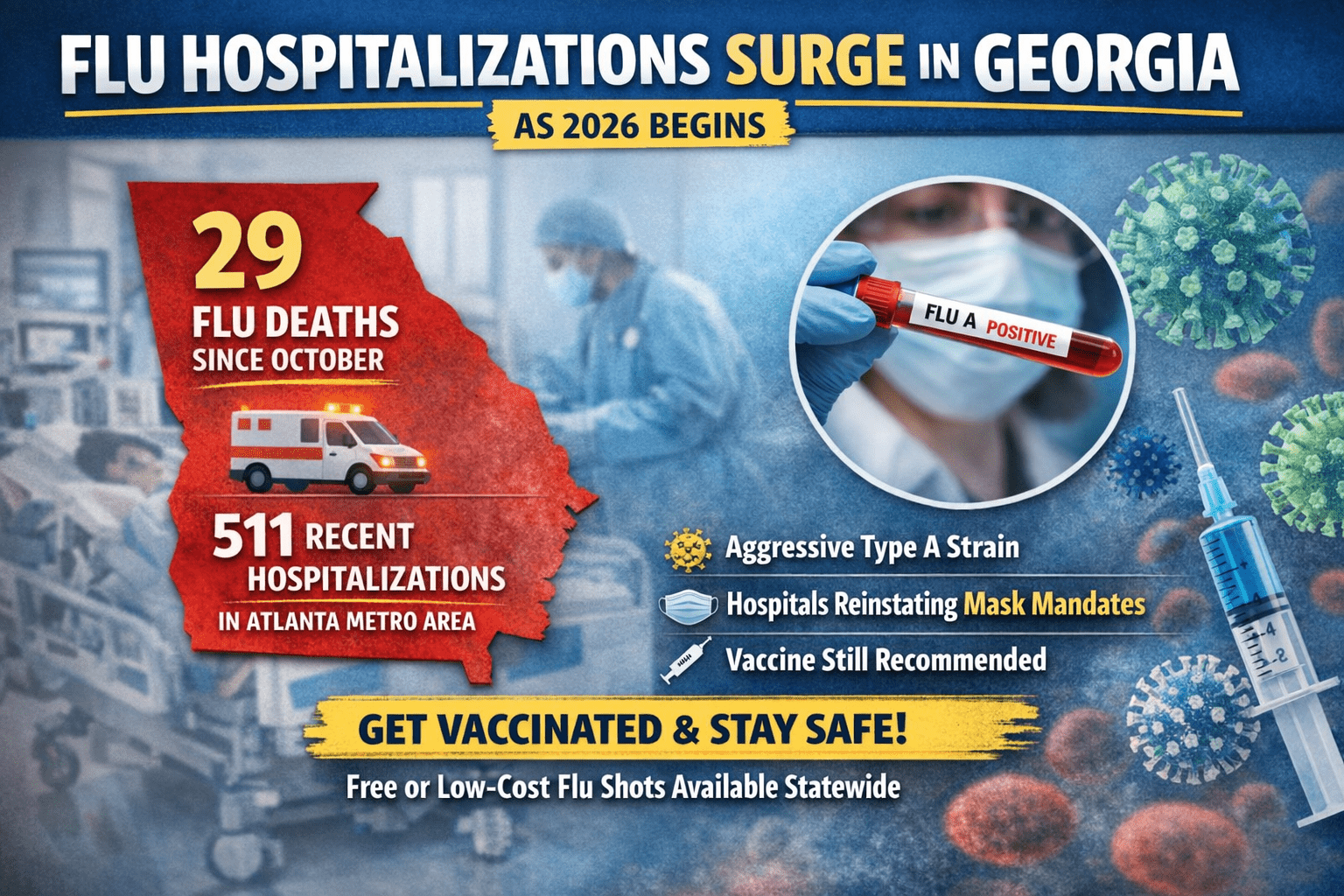
State health officials report that seven Georgians died from flu-related complications between December 20 and December 27, bringing the total to 29 deaths since October. At this same point last year, the state had reported no flu-associated deaths.
Hospitalizations are also climbing sharply. In an eight-county metro Atlanta area, 511 people were hospitalized with the flu through December 27, an increase of roughly 600 hospitalizations in just one week. Health experts caution those numbers likely underestimate how widespread the illness truly is, since many people never seek care or testing.
Doctors across the state say emergency rooms are staying consistently busy. Instead of the usual midweek slowdown, hospitals are seeing steady patient volumes throughout the week, with more people being admitted for shortness of breath, chest pain, and severe flu symptoms. Some hospitals have even reinstated universal masking policies, a move not seen since the height of the COVID-19 pandemic.
Health officials say this season is being driven by an aggressive Type A flu strain known as subclade K, including a mutated version that can cause more severe illness. While this strain is not fully matched by this year’s flu vaccine, doctors stress the shot still offers critical protection—especially against hospitalization and death.
The CDC continues to recommend flu vaccination for everyone six months and older, particularly seniors, pregnant women, and those with underlying conditions. Public health leaders note that free or low-cost vaccines are widely available, even for uninsured residents, through local health departments statewide.
With several months of flu season still ahead, doctors urge Georgians to stay vigilant, get vaccinated, and seek medical care if symptoms worsen.
Press release from the Georgia Department of Public Health:
- Frequent and thorough handwashing with soap and warm water. Alcohol based gels are the next best thing if you don’t have access to soap and water.
- Cough or sneeze into the crook of your elbow or arm to help prevent the spread of the flu.
- Avoid touching your face as flu germs can get into the body through the mucus membranes of the nose, mouth, and eyes.
- If you are sick, stay home from school or work. Flu sufferers should be free of a fever, without the use of a fever reducer, for at least 24 hours before returning to school or work.
- If you are caring for a sick individual at home, keep them away from common areas of the house and other people as much as possible.
Comments