










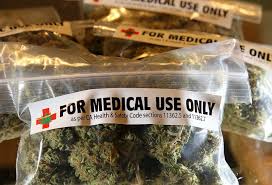
Over the past decade, attitudes toward marijuana in Georgia have undergone a seismic shift, transforming from widespread opposition to overwhelming support for legalization, particularly for medical use. Yet, despite this dramatic change in public sentiment, the state’s cannabis laws largely remain conservative, creating a complex and often contradictory legal landscape.
Recent polls underscore this transformation. A May 2025 AJC poll revealed that 53% of Georgians now favor legalizing marijuana for both medical and recreational purposes, with an additional 15% supporting decriminalization. This marks a significant jump from 2017, when a similar poll found only 46% in favor of legalization. Support for medical marijuana is even more pronounced, with a 2023 AJC poll showing a robust 76% of Georgians believing it should be fully legalized.
While younger adults and liberals consistently show the highest enthusiasm, favorable attitudes are expanding across the political spectrum and age groups. A 2023 Gallup poll noted that national support for legalization reached 55% among Republicans and 64% among adults over 55, reflecting a broader trend mirrored within Georgia.
However, not all voices are aligned with broad legalization. A counter-narrative, focusing on the potential health risks of higher-potency THC products, has emerged. Testimony during a recent Georgia House study committee hearing cited concerns about a link between high-dose cannabis products and increased rates of psychosis, introducing a cautionary note into the debate.
Policy Lags Behind Public Sentiment
Despite the shifting tides of public opinion, Georgia’s official cannabis policies have evolved at a far more cautious pace. The state’s initial foray into cannabis reform began with the 2015 “Haleigh’s Hope Act,” which permitted registered patients to possess low-THC cannabis oil. Crucially, the law initially lacked provisions for in-state production or purchase, forcing patients to seek supplies outside Georgia for years. Only through subsequent legislation and years of incremental changes did the state establish a legal framework for cultivation and, eventually, the opening of in-state dispensaries in 2023.
This cautious approach has resulted in persistent legal confusion. While some progressive local jurisdictions, like Atlanta and Fulton County, have passed ordinances to effectively decriminalize small amounts of marijuana, often leading to a citation rather than an arrest, state law still classifies possession of an ounce or less as a misdemeanor punishable by jail time. This disparity means enforcement varies wildly, with some rural law enforcement agencies maintaining stricter adherence to state statutes.
The enduring gap between public demand and legal policy has also exacerbated racial inequities. A sobering 2022 ACLU report highlighted that Black Georgians were arrested for marijuana possession at three times the rate of white Georgians, despite similar usage rates, underscoring the disproportionate impact of current laws.
Current Legislative Landscape
Lawmakers are not entirely ignoring the issue. In 2025, study committees were formed to tackle the complex interplay of conflicting state and federal regulations concerning the burgeoning market of hemp-derived THC products. Additionally, the state Senate passed a bill in March 2025 aimed at expanding the low-THC medical program, though it awaits action in the House.
Today, cannabis in Georgia operates under a tightly controlled framework. The state’s medical program caters to registered patients with qualifying conditions, allowing access to low-THC oil with a 5% THC cap. While the retail network has expanded, many patients express a desire for broader access and more diverse delivery methods. For recreational users, all use and possession remain illegal at the state level. Meanwhile, a distinct market for hemp-derived THC products has flourished following a 2018 federal law, yet this sector remains complex, inconsistently regulated, and a source of ongoing debate.
As public support for cannabis reform continues to mount, Georgia finds itself at a crossroads. The growing chasm between voter sentiment and legislative action suggests that the debate over marijuana’s future in the state is far from settled, promising continued contention and potential for significant policy shifts in the years to come.
Comments