










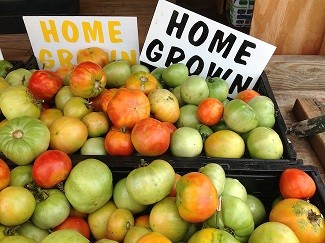
Every summer the race is on to pick the first ripe tomato off the vine! It is a point of pride for many home gardeners to boast of that delicious first taste of summer. My dad, Thomas Brewer always took pride in having the first ripe tomato in Lyerly. Having a sliced tomato on fresh bread with bacon and homegrown lettuce is my favorite way to enjoy that first ripe tomato and makes a meal to remember. Of course, there are any number of ways to assemble a BLT, but a juicy tomato whether homegrown or “picked” from the grocery store or farm market takes center stage.
Once the season is in full swing, tomatoes seem to come in bountiful amounts and can overwhelm the ability to consume their plentiful numbers. UGA Extension has the answer for enjoying tomato season all year round with recommendations for preserving them in a variety of ways. Canning, freezing, drying, and yes, even jam!
Be sure to choose only disease-free, preferably vine-ripened tomatoes for preserving. Do not use tomatoes from dead or frost-killed vines. Use safe food handling practices when preparing tomatoes for preserving. Wash hands with soap and warm water. Keep all utensils and surfaces clean by washing with soap and hot water, rinsing and air drying. Gently rub tomatoes under cold running water to remove soil, drain, and blot dry with paper toweling. Canned tomatoes and tomato products provide a ready-to-eat option for year-round enjoyment. Tomatoes have traditionally been canned in a boiling water bath canner, processed at boiling for your altitude-correct time. However, for some tomato packs, pressure canning is also an option as long as they are still acidified as if for boiling water canning. And, for most tomato products with added low-acid ingredients, pressure canning is required for safety. UGA Extension recommended canning procedures for tomatoes and tomato products will specify recipes with instructions for safe canning whether in a boiling water canner or pressure canner, or pressure canner only. Following these recommendations is essential for a safe product. Acidifying tomatoes is recommended for canning because tomatoes may have natural pH values that are close to and even above 4.6, the danger mark for botulism poisoning. To acidify tomatoes, add 1 tablespoon of bottled lemon juice or ¼ teaspoon of citric acid to each pint jar for tomatoes. Use 2 tablespoons of bottled lemon juice or ½ teaspoon of citric acid per quart jar of tomatoes.
Green tomatoes are more acidic than ripe tomatoes and can be safely canned using UGA Extension directions for tomatoes and tomato products. Unripe tomatoes can be used in a variety of ways and help utilize those end of season tomatoes that fail to ripen before frost. Freezing tomatoes is a convenient preserving method for tomatoes to be used in stews, seasonings, or juices. Raw tomatoes will not be solid when thawed. When tomatoes are frozen, water contained in the tomato freezes, expands to form ice crystals, and causes cell walls to rupture. Once thawed the texture of the tomatoes will be soft. Sliced green tomatoes for frying can be frozen also.
Dried tomatoes, either sliced in ¼”- 3/8” slices and dehydrated 6-12 hours, or puréed to make tomato leather, provide a great shelf-stable tomato product to have handy for snacks or to add to soups or stews. Drying tomatoes is a very easy and convenient way to preserve tomatoes after ample have been canned or frozen. Tomato powder for dried soup mixes can also be made by pulverizing dried tomatoes in a food processor or blender.
Tomato products also include a wide variety of pickles and relishes, sauces, salsas, soup mixtures, and even tomato jam!
Recipes for these products can be found online @ https://nchfp.uga.edu and in the So Easy to Preserve 6th Edition Book ordered from UGA Extension.
Preserving is an ideal way to enjoy tomatoes after the growing season. I can’t picture a summer without preserving tomatoes. It has been part of my summers for 50 years. Tomatoes provide a variety of delicious, nutrient-rich dishes and accompaniments for mealtime or snacks. Be sure to include tomatoes in your food preservation plans this season.
Every summer the race is on to pick the first ripe tomato off the vine! It is a point of pride for many home gardeners to boast of that delicious first taste of summer. My dad, Thomas Brewer always took pride in having the first ripe tomato in Lyerly. Having a sliced tomato on fresh bread with bacon and homegrown lettuce is my favorite way to enjoy that first ripe tomato and makes a meal to remember. Of course, there are any number of ways to assemble a BLT, but a juicy tomato whether homegrown or “picked” from the grocery store or farm market takes center stage.
Once the season is in full swing, tomatoes seem to come in bountiful amounts and can overwhelm the ability to consume their plentiful numbers. UGA Extension has the answer for enjoying tomato season all year round with recommendations for preserving them in a variety of ways. Canning, freezing, drying, and yes, even jam!
Be sure to choose only disease-free, preferably vine-ripened tomatoes for preserving. Do not use tomatoes from dead or frost-killed vines. Use safe food handling practices when preparing tomatoes for preserving. Wash hands with soap and warm water. Keep all utensils and surfaces clean by washing with soap and hot water, rinsing and air drying. Gently rub tomatoes under cold running water to remove soil, drain, and blot dry with paper toweling. Canned tomatoes and tomato products provide a ready-to-eat option for year-round enjoyment. Tomatoes have traditionally been canned in a boiling water bath canner, processed at boiling for your altitude-correct time. However, for some tomato packs, pressure canning is also an option as long as they are still acidified as if for boiling water canning. And, for most tomato products with added low-acid ingredients, pressure canning is required for safety. UGA Extension recommended canning procedures for tomatoes and tomato products will specify recipes with instructions for safe canning whether in a boiling water canner or pressure canner, or pressure canner only. Following these recommendations is essential for a safe product. Acidifying tomatoes is recommended for canning because tomatoes may have natural pH values that are close to and even above 4.6, the danger mark for botulism poisoning. To acidify tomatoes, add 1 tablespoon of bottled lemon juice or ¼ teaspoon of citric acid to each pint jar for tomatoes. Use 2 tablespoons of bottled lemon juice or ½ teaspoon of citric acid per quart jar of tomatoes.
Green tomatoes are more acidic than ripe tomatoes and can be safely canned using UGA Extension directions for tomatoes and tomato products. Unripe tomatoes can be used in a variety of ways and help utilize those end of season tomatoes that fail to ripen before frost. Freezing tomatoes is a convenient preserving method for tomatoes to be used in stews, seasonings, or juices. Raw tomatoes will not be solid when thawed. When tomatoes are frozen, water contained in the
tomato freezes, expands to form ice crystals, and causes cell walls to rupture. Once thawed the texture of the tomatoes will be soft. Sliced green tomatoes for frying can be frozen also.
Dried tomatoes, either sliced in ¼”- 3/8” slices and dehydrated 6-12 hours, or puréed to make tomato leather, provide a great shelf-stable tomato product to have handy for snacks or to add to soups or stews. Drying tomatoes is a very easy and convenient way to preserve tomatoes after ample have been canned or frozen. Tomato powder for dried soup mixes can also be made by pulverizing dried tomatoes in a food processor or blender.
Tomato products also include a wide variety of pickles and relishes, sauces, salsas, soup mixtures, and even tomato jam!
Recipes for these products can be found online @ https://nchfp.uga.edu and in the So Easy to Preserve 6th Edition Book ordered from UGA Extension.
Preserving is an ideal way to enjoy tomatoes after the growing season. I can’t picture a summer without preserving tomatoes. It has been part of my summers for 50 years. Tomatoes provide a variety of delicious, nutrient-rich dishes and accompaniments for mealtime or snacks. Be sure to include tomatoes in your food preservation plans this season.
Comments