










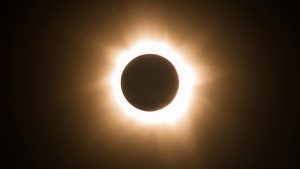
Skywatchers around the world are preparing for a rare celestial event this summer as a total solar eclipse is scheduled to occur on August 12, 2026, the first total solar eclipse visible anywhere on Earth in more than two years.
Unfortunately, residents of Georgia and the southeastern United States will not be able to see the eclipse. The path of totality will cross parts of the Arctic, Greenland, Iceland, Portugal, and northern Spain, where observers will experience the Moon completely blocking the Sun for up to a little more than two minutes.
During a total solar eclipse, daytime skies briefly darken, temperatures can drop, and the Sun’s outer atmosphere, known as the corona, becomes visible. Astronomers consider it one of the most spectacular natural phenomena that can be observed from Earth.
The August eclipse is expected to draw thousands of travelers to Spain, Iceland, and other locations within the path of totality. Tourism officials in Spain are already preparing for large crowds, with many accommodations booking well in advance.
While Georgia won’t be in the viewing area for this eclipse, residents may not have to wait too long for another opportunity. Astronomers continue to track future eclipses around the world, and eclipse enthusiasts are already planning trips to witness the August event firsthand.
Anyone traveling to view the eclipse should remember that certified eclipse glasses or approved solar viewing equipment are required whenever any portion of the Sun remains visible. Looking directly at the Sun without proper eye protection can cause permanent eye damage.
Comments