










Walker County officials are continuing work on proposed regulations governing future data center development, with a county study committee now reviewing a draft ordinance section by section.
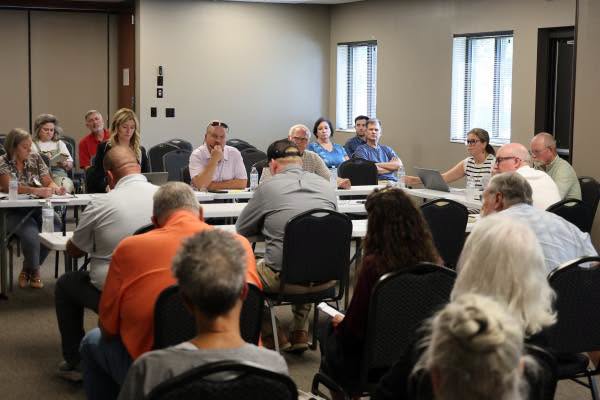
The Walker County Data Center Development Standards Study Committee recently held its third meeting as members considered requirements involving property size, water and power capacity, setbacks, environmental protections and where data centers could be located.
The current draft would generally restrict data centers to industrially zoned property and establish a 10-acre minimum parcel size. However, committee members questioned whether those requirements should apply to smaller data centers and fiber-related facilities that may require only a fraction of that space.
Some members suggested allowing smaller facilities in commercial districts while reserving stricter industrial zoning requirements for larger operations. Planning and Zoning Director Jon Pursley said developers seeking smaller sites or commercial locations could potentially seek a conditional-use permit or variance, giving the county an opportunity to consider those projects individually.
Walker County currently has 63 industrial-zoned parcels, with much of the available acreage concentrated in the approximately 400-acre Walker County Business Park and the 50-acre Northwest Georgia Business Park in Rock Spring.
The committee also discussed the potential demands data centers could place on local utilities.
Walker County Water and Sewerage Authority currently has approximately 4.5 to 5 million gallons per day of excess capacity, but officials cautioned that planned commercial development, including the Pilgrim’s prepared foods facility, along with continued residential growth, will consume some of that available capacity.
Committee members agreed that data center developers should be required to provide utility capacity confirmation letters covering every phase of a proposed project before permits are approved.
The committee is also considering requirements for closed-loop cooling systems, which can reduce water consumption compared with some traditional data center cooling methods.
Proposed development standards currently include a 400-foot setback from residential property, a 100-foot setback from neighboring industrial property, at least 15% green space, and a maximum building height of 50 feet. HVAC equipment and generators would be required to either be located on rooftops or positioned away from residential property.
Other issues under consideration include prohibiting on-site fossil-fuel power plants, requiring developers to obtain their own utility easements, protecting historic areas such as McLemore Cove, and preventing concentrations of data centers that could create cumulative environmental impacts.
The latest draft also includes a requirement for performance and decommissioning bonds, intended to protect Walker County if a data center is abandoned and infrastructure must be removed.
Committee members recently toured regional data centers and smaller facilities to see different types of operations firsthand. Their next discussions are expected to focus on noise and lighting standards.
The committee is working toward a December 4 deadline for its recommendations. The proposed ordinance would then go before the Walker County Planning and Zoning Board for public hearings before eventually reaching the Walker County Board of Commissioners for consideration, with a final vote anticipated in early 2027.
Comments