






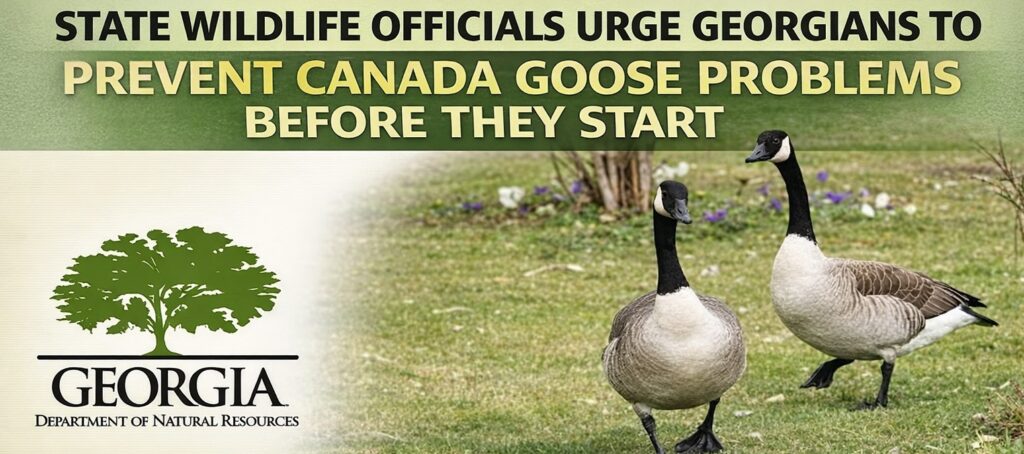
With nesting season now underway, state wildlife officials are encouraging homeowners, landowners, and property managers to take steps now to prevent conflicts with Canada geese before they become bigger problems later in the year.
The Georgia Department of Natural Resources’ Wildlife Resources Division says Canada geese are increasingly common in developed areas, including neighborhood ponds, business parks, golf courses, subdivisions, and city green spaces. While the birds are often tolerated, officials say their behavior can become more aggressive during nesting season as they begin defending nests and nearby territory.
Wildlife biologist Kara Nitschke says geese usually will not bother people if left alone, but that can change quickly once nesting begins. She says the birds may see people as threats and respond by trying to protect the area around their nests.
Officials say now is the best time to act, especially for property owners who have dealt with goose problems in the past. During this part of the year, geese are still deciding where to settle, making it easier to discourage them from nesting in places where they may later create issues.
The state recommends starting with harassment techniques, including reflective tape, scarecrows, predator decoys, motion-activated sprinklers, and loud noises. While those methods can help, officials say they require consistency and may not always work in every situation.
State and federal officials also remind residents that Canada geese are protected under the law. That means it is illegal to hunt, kill, sell, purchase, or possess them except as allowed under migratory bird regulations or with the proper permits.
For longer-term control, officials say certain federal permits are available to reduce goose reproduction through nest removal or egg treatment methods designed to keep eggs from hatching. Wildlife officials say those tools can help prevent goose populations from growing too large in areas where repeated conflicts have occurred.
More information about Canada geese and preventing wildlife conflicts is available through the Georgia Department of Natural Resources.
Comments