






For generations of Chattooga County families, the textile mill at Trion was more than a place to work.
It was at the center of a community.
Families depended on the mill for their livelihoods. Generations worked there, and the history of Trion itself became inseparable from the history of textile manufacturing.
But during the depths of the Great Depression, tensions between textile workers and mill management were growing throughout the South.
In September 1934, those tensions reached Trion.
And on September 5, they turned deadly.
Two men — Deputy Sheriff W. M. “Milton” Hix and strike sympathizer J. B. Blalock — were fatally shot during a confrontation outside the Trion Cotton Mill.
The events in Trion were part of a much larger labor uprising that became known as the General Textile Strike of 1934, one of the largest labor disputes in American history and the largest labor protest the South had seen.
The Mill That Built A Town
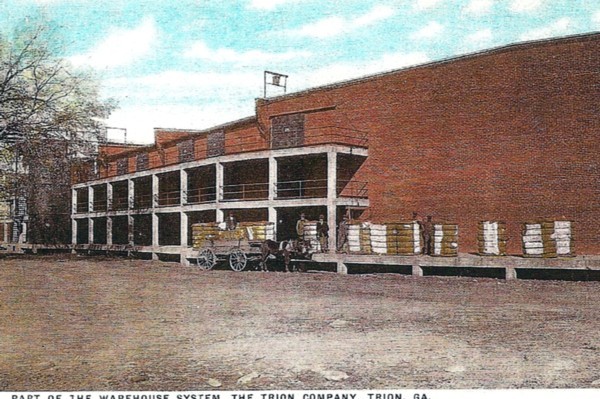
Textile manufacturing had been part of Trion for almost a century by the time of the strike.
The Trion Factory was established in 1845, with production beginning in 1847, making it the first cotton mill in Northwest Georgia.
The factory survived the Civil War. According to the New Georgia Encyclopedia, owner Andrew Allgood convinced Union General William T. Sherman that the factory had manufactured cloth for the Confederacy under protest and that Allgood remained a Union man. Sherman issued protection papers for the mill, sparing it from destruction.
Over the decades that followed, the mill expanded and Trion developed into one of Northwest Georgia’s best-known textile communities.
By the early 20th century, textile mills across Georgia weren’t simply workplaces. Entire communities grew around them, with generations of families depending on mill employment.
But by the 1920s and early 1930s, the textile industry was changing.
New machinery allowed fewer workers to operate more equipment. Mills adopted what workers called the “stretch-out” — fewer employees being expected to tend more machines and produce more cloth.
Then came the Great Depression.
Jobs became even more precious, wages were under pressure and workers had little economic security.
The New Deal Raises Workers’ Expectations
The election of President Franklin D. Roosevelt in 1932 brought major changes to American labor policy.
Congress passed the National Industrial Recovery Act in 1933 as part of Roosevelt’s New Deal.
For textile workers, the new federal policies offered hope.
Industry codes established standards concerning working hours and wages. Child labor by those under 16 was prohibited, and workers believed the law protected their right to organize.
But throughout the textile South, workers complained that mill operators were failing to live up to the promises of the new system.
Discontent grew.
By 1934, the situation was ready to explode.
The Great Textile Strike
In September 1934, textile workers across the country walked off their jobs.
Approximately 170,000 Southern textile workers participated, including an estimated 44,000 workers in Georgia.
Across the nation, participation numbered in the hundreds of thousands.
The strike became known as the General Textile Strike of 1934, or later, the Uprising of ’34.
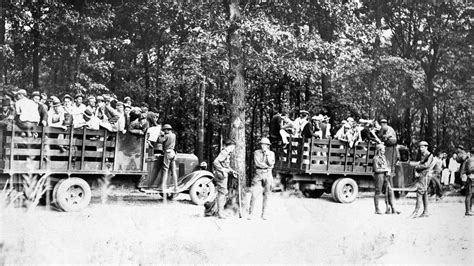
One of the tactics used by organizers was the formation of “Flying Squadrons.”
These were groups of workers who traveled by automobile from one textile community to another, encouraging workers to leave their jobs and helping establish picket lines around mills that remained open.
Eventually, the Flying Squadrons came to Trion.
A 1976 historical edition of The Summerville News recalled that workers came from Rome along with Flying Squadrons from outside the community in an effort to close the Trion plant.
A local resident, Sadd Dalton, remembered the confrontation decades later.
He described what happened in Trion as being “just like war.”
September 5, 1934
On Wednesday, September 5, 1934, tensions at the Trion mill erupted into violence.
Historical accounts differ over exactly how the shooting began.
One scholarly account of the Georgia strike says the Trion mill was being guarded by 46 special deputy sheriffs when the confrontation occurred.
Local Deputy Jim Parrish blamed outsiders from Rome, saying they attempted to disarm some of the special deputies.
But strike sympathizer W. E. Hawkins gave a different account, saying deputies opened fire as his group emerged from an automobile in front of the mill.
What is certain is that a gun battle followed.
Historical accounts describe a confrontation lasting as long as two hours, with more than 20 people reportedly injured.
Two men were mortally wounded.
Deputy Sheriff W. M. Hix was shot.
So was J. B. Blalock, identified in contemporary records as a strike sympathizer.
Both men died.
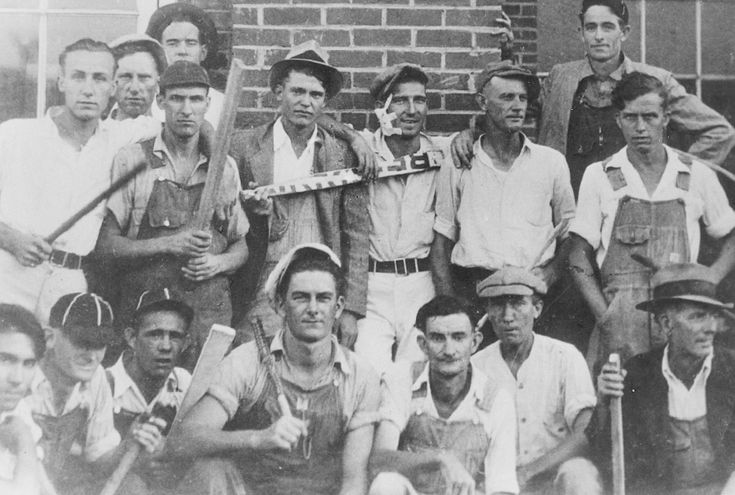
An extraordinary photograph from that day survives in the Edward Levinson Collection at the Walter P. Reuther Library at Wayne State University.
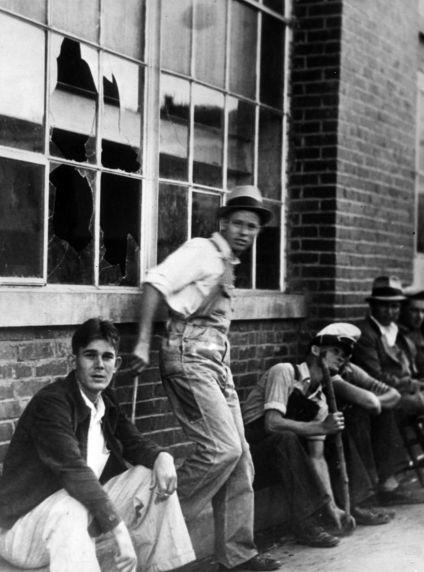
It shows picketers outside the Trion Cotton Mill carrying sticks, iron bars and clubs.
The original caption on the back of the photograph identifies Hix and Blalock as the two men fatally shot in the September 5 clash.
It also identifies another man visible in the photograph.
A picketer with a bandaged neck was Mac Harris, who had been wounded during the fight.
According to the photograph’s original caption, after the deadly confrontation the picketers reformed their lines and the mill closed.
Carrying Deputy Hix Through The Mill
One of the most vivid local memories of the strike concerns what happened to Deputy Hix after he was wounded.
The account preserved by The Summerville News in 1976 said union members would not allow an ambulance through to pick him up.
Men instead placed the wounded deputy on a stretcher.
They carried him through the mill, across the footbridge and to the hospital.
Hix later died from his wounds.
The newspaper’s account identified him as the father of Mrs. Jack Elrod and Milton Hix, who were still living in Chattooga County when that history was published more than four decades later.
For local families, the national labor struggle had suddenly become something intensely personal.
Violence Spreads Across Georgia
Trion wasn’t the only Georgia community where the strike turned deadly.
Another person was killed at the Enterprise Mill in Augusta on the same day as the Trion shootings.
Violence and confrontations were also reported at mills in Cedartown, Columbus, Macon and Porterdale.
Georgia Governor Eugene Talmadge initially resisted using the National Guard.
There was a political dimension as well: Talmadge was facing a Democratic primary election.
A week after the Trion shootings, Talmadge won reelection in a landslide.
Almost immediately afterward, he mobilized thousands of Georgia National Guardsmen and declared martial law in areas where state officials said local authorities could no longer control the unrest.
National Guardsmen armed with rifles and bayonets moved into textile communities.
Striking workers were arrested.
Some were transported to Fort McPherson in Atlanta, where they were confined in outdoor holding areas.
Photographs preserved today show armed Georgia National Guardsmen escorting textile strikers during those tense September days.
The Strike Ends
The nationwide strike ultimately ended later in September.
For many workers, the result was bitterly disappointing.
Despite federal intervention and promises that workers’ grievances would be investigated, the strike produced few immediate improvements for Southern textile workers.
Many people who had participated found they no longer had jobs waiting for them.
Strike activists were sometimes blacklisted from textile employment.
Because mill employment could also be tied to housing, losing a job could mean losing a home as well.
The New Georgia Encyclopedia notes that fear of being blacklisted caused many workers to turn away from organized labor.
And in mill communities throughout the South, some families simply stopped talking about what had happened.
Remembering What Happened In Trion
More than nine decades have passed since gunfire erupted outside the Trion mill.
The textile industry that once employed generations of Chattooga County residents has changed dramatically, and many people living here today have no firsthand memory of a time when the mill dominated everyday life in Trion.
But the events of September 1934 remain an important part of Chattooga County history.
The men standing outside the mill that day weren’t characters in a distant national story.
They were people in Trion.
They had families.
They worked here.
And two of them never went home.
Deputy Sheriff W. M. “Milton” Hix and strike sympathizer J. B. Blalock died during one of the most turbulent episodes in the history of Trion.
Their deaths also became part of something much larger.
The shootings in Trion were among the incidents that demonstrated just how serious the national textile conflict had become and preceded Governor Talmadge’s decision to mobilize the Georgia National Guard.
Today, the surviving photograph from September 5, 1934, freezes one moment from that history.
Men stand outside the Trion Cotton Mill. Some hold clubs and iron bars. One has a bandage around his neck.
Behind them stands the mill that provided a livelihood for their community — and had become the center of a national struggle over wages, working conditions and the rights of American workers.
For Chattooga County, the General Textile Strike wasn’t something that happened somewhere else.
It happened here.
And on this Labor Day, 92 years later, it remains a reminder that the history of American labor is also part of the history of Chattooga County.
Comments