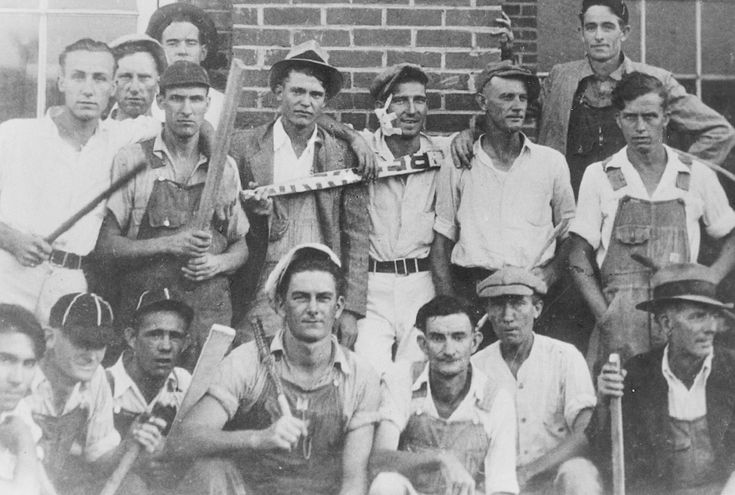










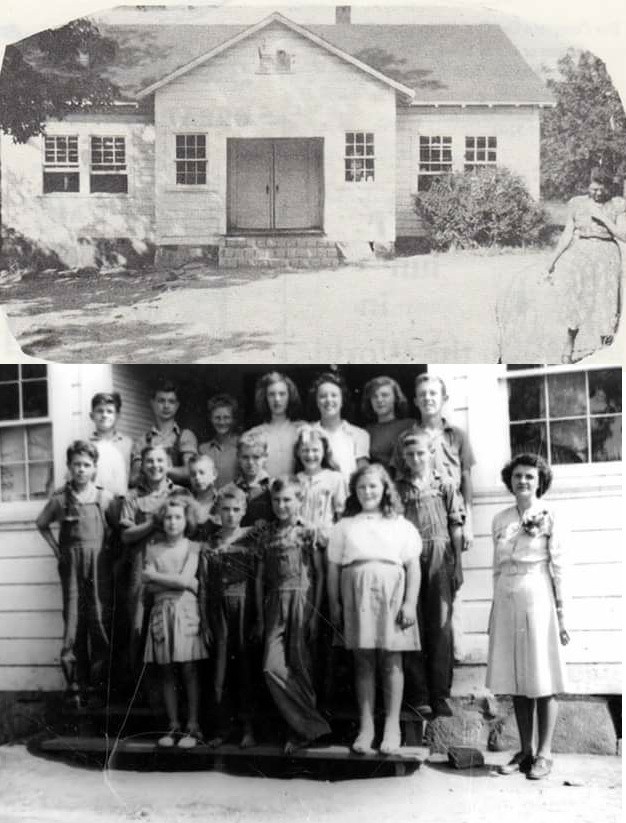
Cloudland School in the 1950s. Photo Credit: Jimmy Holbrook family photos
Today, Chattooga County is served by two public school systems — the Chattooga County School District and the Trion City School District. But more than 150 years ago, education in the county looked considerably different, with small community schools scattered throughout the countryside and nine original school districts.
The history of organized public education in Chattooga County dates to February 7, 1871, when the county’s first Board of Education held its inaugural meeting.
The county was divided into nine school districts: Summerville, Trion, Teloga, Alpine (Menlo), Dirtseller, Seminole, Coldwater, Dirttown and Haywood. These were local divisions of the county school system rather than nine independent school systems.
Before public education became established, many children attended private academies, church-supported schools or small neighborhood schools. Some families hired private tutors, while children from families with limited financial resources attended what were known as poor schools.
As public education expanded, schools were established throughout Chattooga County, often serving relatively small geographic areas.
Among the many schools that once operated in the county were Cloudland, Teloga, Chelsea, Pine Grove, Menlo, Lyerly, Holland, Gore, Bethel, Subligna, Pennville, Myers, Hanson and Summerville.
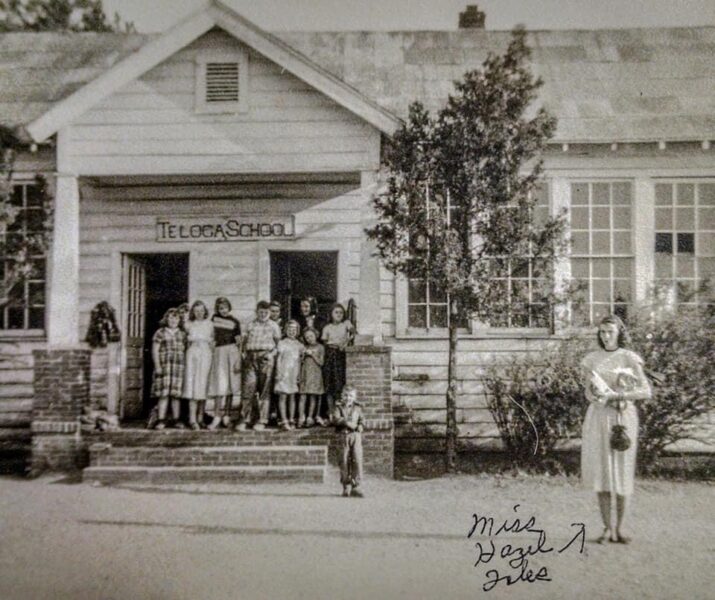
Teloga School. Photo Credit: Chattooga County Historical Society
Other important schools included the Chattooga Training School at Holland, Summerville Colored School, which later became A.C. Carter School, and West Side School in Trion. These institutions served Black students during the era of segregated public education.
Many of the small rural schools served as gathering places for their communities. School programs, holiday celebrations, sporting events and graduation exercises often brought together families from throughout the surrounding area.
Historical records show that by 1900, Chattooga County had 37 schools for white students and 12 schools for Black students. Five years later, consolidation had reduced those numbers to 26 white schools and 11 Black schools.
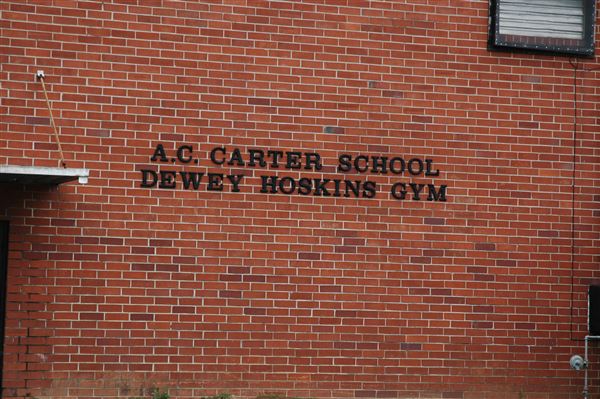
A.C. Carter School. Photo Credit: Locationshub.com
The financial challenges facing early schools were considerable. The county Board of Education sometimes borrowed money from banks, private citizens and churches to continue operating.
By April 1921, the financial situation had become so serious that school board members discussed the possibility of suspending county school operations.
As transportation improved, many of the smaller community schools were gradually consolidated into larger facilities.
One of the earliest important educational institutions was Bethel Academy in the Gore community, which helped establish secondary education in Chattooga County. Bethel School eventually consolidated into Gore School.
Gore High School became an important educational center for families in the eastern portion of the county. In 1921, residents of that area decided to establish a consolidated high school to serve several communities.
Subligna also developed a consolidated school during the 1920s, eventually offering a full four-year high school program.
The consolidation process continued through the middle of the twentieth century.
In 1959, Subligna High School merged with Summerville High School, a decision that drew objections from some residents who wanted to preserve their community school.
A major turning point came in the fall of 1961, when Chattooga High School began operating as a consolidated high school serving students from across the county. The school’s first graduating class received its diplomas in 1962.
According to Gene McGinnis of the Chattooga County Historical Society, the consolidation process was not without controversy. Communities such as Lyerly and Menlo resisted losing their local high schools, with opposition particularly strong in Menlo.
McGinnis says the smaller schools faced difficulties meeting state educational standards, including requirements involving school facilities. Those concerns helped drive the movement toward consolidation.
The creation of Chattooga High School represented a major change in the county’s educational system, bringing students from communities that had previously maintained their own high schools into a single county high school.
School desegregation brought additional changes during the 1960s.
McGinnis recalls that the Chattooga County school system began a voluntary integration program in 1965, when students were allowed to choose which school they would attend.
He was an eighth-grade student at the time and remembers approximately seven or eight Black students enrolling at Summerville Junior High School, while several others attended Chattooga High School.
The voluntary program marked an early stage in the integration of the county’s public schools.
Trion’s West Side School was also integrated into the independent Trion school system in 1965.
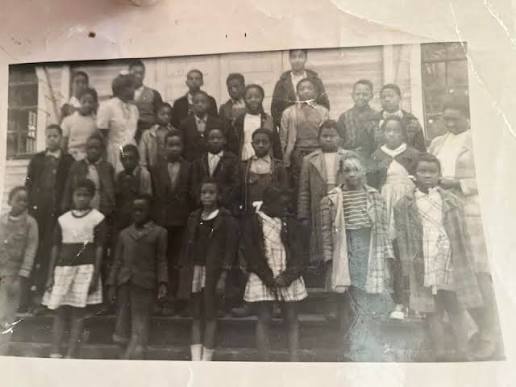
Trion West Side School. Photo Credit: African American Culture, Inc. Facebook page
McGinnis also recalls another development from the 1960s that could have significantly changed the future of public education in Chattooga County.
For a brief period, the Chattooga County and Trion City school systems considered the possibility of merging into a single school system.
The proposal never resulted in a merger, and the two systems continued operating independently.
Over time, many of the old community school buildings were demolished, converted to other uses or simply disappeared.
Today, only two public high schools remain in Chattooga County — Chattooga High School and Trion High School — operating under two separate school systems.
But the history of education in Chattooga County is much larger than those two schools.
For generations of local residents, schools in places like Teloga, Cloudland, Gore, Subligna, Holland, Pennville and the other rural communities were important parts of everyday life.
Their names remain part of Chattooga County’s history, recalling a time when children often attended school within walking distance of home and the local schoolhouse was one of the centers of community life.
Thanks to Gene McGinnis with the Chattooga County Historical Society for helping us with accuracy and input on this feature story.