









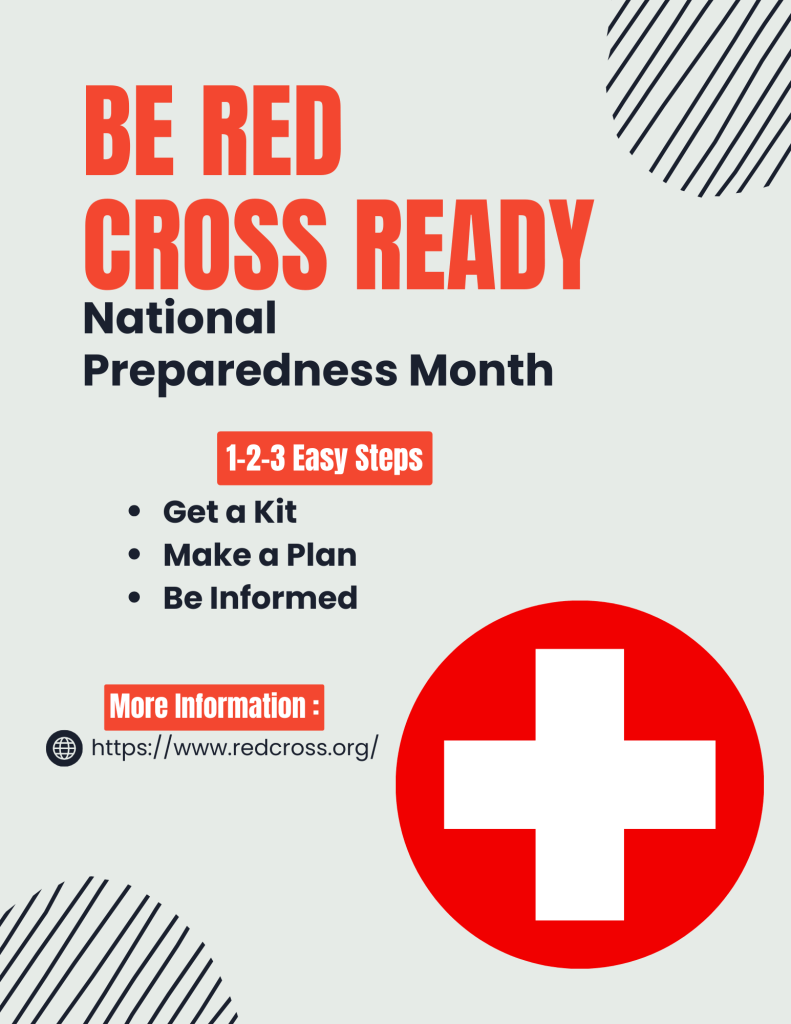
September is National Preparedness Month, and the American Red Cross of Georgia is encouraging families to use the month to make sure they are ready when emergencies strike.
The Red Cross says major disasters are now occurring about once every two weeks, in addition to smaller emergencies such as house fires that happen every day. The organization says preparing for an emergency doesn’t have to be expensive, with several important steps costing little or nothing.
Adelaide Kirk, Regional Disaster Officer for the American Red Cross of Georgia, says disasters can happen anywhere and at any time, making advance preparation one of the best ways families can protect themselves.
One recommendation is to develop a household emergency plan. Families should choose two meeting places — one near their home and another outside their neighborhood — and determine in advance where they would go and how they would get there if an evacuation became necessary. Plans should also account for children, older family members, people who may need assistance and pets.
The Red Cross also recommends preparing two emergency supply kits. A go-kit should contain at least three days of supplies that can be quickly taken during an evacuation. A stay-at-home kit should contain two weeks of food and water, along with a one-month supply of necessary medications when possible.
Suggested supplies include flashlights, a first aid kit, a battery-powered or hand-crank radio, backup batteries and chargers, important personal records, cash, maps, hygiene supplies, pet and baby supplies, N95 masks, a manual can opener, extra keys, blankets and other necessities.
Families don’t have to purchase everything at once. The Red Cross suggests building kits gradually by using supplies already available at home and adding items over time when they are on sale.
Another free preparedness tool is the Red Cross Emergency app, which provides National Weather Service alerts, live weather maps, preparedness information and assistance locating Red Cross shelters.
Businesses, schools and organizations are also encouraged to prepare. The Red Cross offers its free Ready Rating Program, providing resources to help organizations prepare for disasters, maintain operations and protect people and property.
The National Weather Service also encourages residents to become involved in community preparedness efforts, including programs such as Community Emergency Response Teams, or CERT, the Red Cross, SKYWARN and other volunteer organizations.
The message from emergency officials during National Preparedness Month is simple: don’t wait until a tornado, flood, fire, extended power outage or other emergency is already happening to decide what your family will do.
Comments