










Georgia’s state tax collections continued to grow in August, with revenues approaching $2.5 billion for the month.

Georgia’s state tax collections continued to grow in August, with revenues approaching $2.5 billion for the month.
Georgia began the new fiscal year with an increase in state tax collections, with net tax revenues totaling $2.57 billion in July.

Georgia’s temporary suspension of the state motor fuel tax contributed to a significant decline in tax collections during May, according to state revenue figures.
State officials reported that net tax revenues for May declined by 12.6 percent compared to the same month a year ago. The decrease comes after Georgia suspended its motor fuel excise tax for part of May in an effort to provide relief to drivers facing higher fuel costs. The suspension remained in effect through June 2.
The gas tax holiday temporarily removed Georgia’s fuel excise tax, which currently amounts to about 33 cents per gallon on gasoline. State leaders said the suspension was intended to help offset rising fuel prices and reduce costs for consumers at the pump.
While the suspension provided relief for motorists, it also reduced one of the state’s major sources of transportation-related revenue. The tax is normally collected at the wholesale level and helps fund transportation and infrastructure projects throughout Georgia.
The gas tax suspension officially expired on June 3, and state officials have indicated it will not be extended. As a result, motorists across Georgia may continue to see fuel prices fluctuate throughout the summer as the tax returns and market conditions evolve.
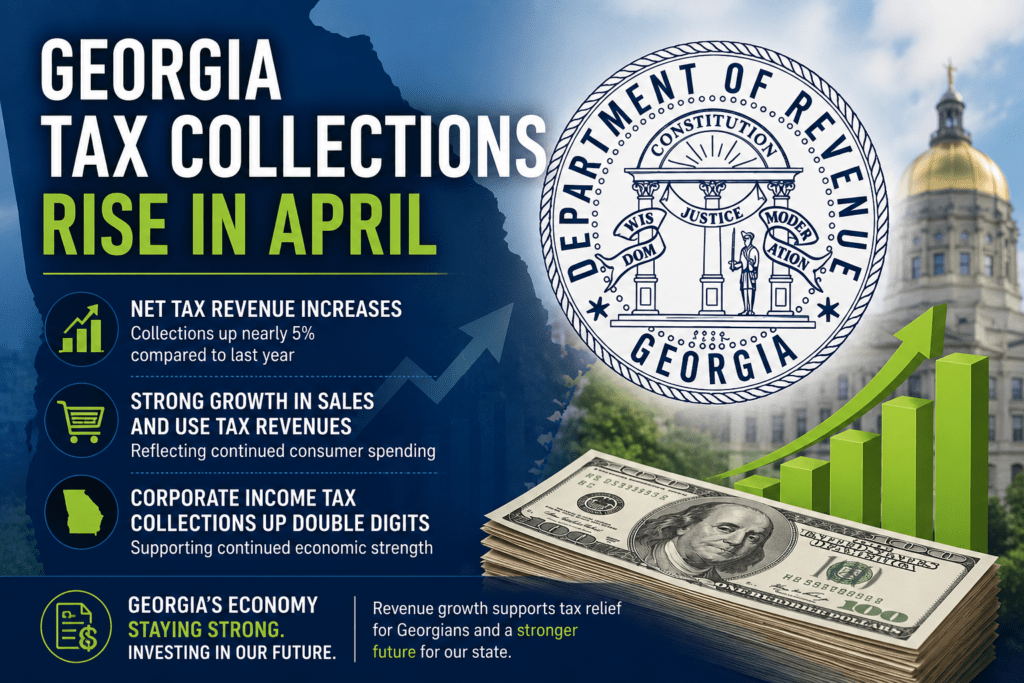
Georgia’s tax collections continued to climb in April, according to newly released state revenue figures, reflecting continued growth in sales tax and corporate tax revenues statewide.

Walker County closed out fiscal year 2025 with more than $18 million in available funds, according to its latest annual audit, reflecting a significant increase in financial reserves.

Georgia’s net tax collections slipped slightly in January, with the state reporting $3.03 billion in net tax revenue for the month — down $18.1 million, or 0.6%, compared to January of last year. State officials framed the dip as a modest month-to-month decline, not a major shift in overall revenue performance.