










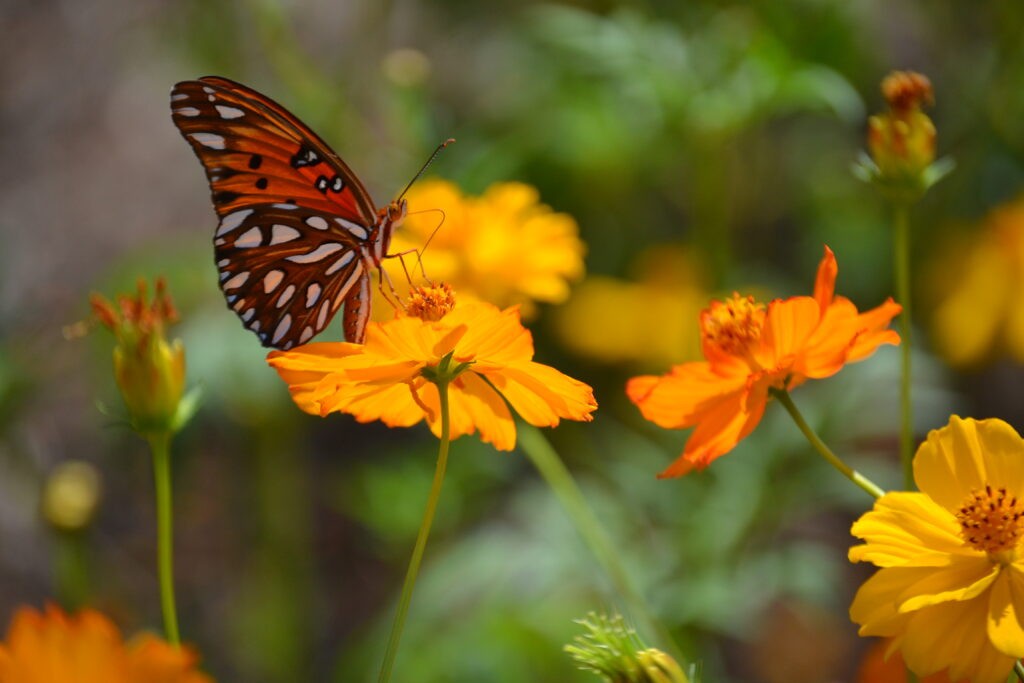
Those patches of taller grass and wildflowers motorists sometimes see along Georgia highways may be serving a purpose beyond simply beautifying the roadside.
The Georgia Department of Transportation is using portions of highway rights-of-way across the state to help provide habitat for monarch butterflies and other pollinators.
Monarch butterflies make an annual migration of as much as 3,000 miles across North America, passing through Georgia along the way. The butterflies depend on suitable habitat for food, shelter and reproduction, but habitat loss and other environmental pressures have contributed to declining populations.
Georgia DOT joined the Candidate Conservation Agreement with Assurances for Monarch Butterflies on Energy and Transportation Lands in 2021. The voluntary conservation program encourages transportation agencies and utilities to create, maintain and manage monarch habitat on property they already control.
One of GDOT’s approaches is something called conservation mowing.
Instead of mowing selected roadside areas frequently, vegetation is allowed to grow so native plants and flowers can bloom and provide food and habitat for pollinators. Those areas are generally mowed during specific periods when pollinator activity is lower.
The program isn’t limited to South Georgia. Conservation mowing areas are located in North Georgia, including portions of State Route 136 and State Route 441 in Georgia DOT’s District 1. Other conservation mowing areas are located along highways in west-central, east-central and southern Georgia.
GDOT also establishes and maintains wildflower areas throughout Georgia each year, providing nectar sources for monarch butterflies, bees and other pollinators.
Other conservation practices include targeted herbicide applications intended to control invasive plants while protecting beneficial native vegetation, prescribed burning at selected locations and areas where roadside vegetation is intentionally allowed to grow with limited disturbance.
Another important part of the effort involves milkweed.
Milkweed is essential to monarch reproduction because monarchs lay their eggs on the plant and monarch caterpillars feed exclusively on it. GDOT is working with The Ray Anderson Foundation, known as The Ray, on projects that incorporate butterfly milkweed and other native flowering plants along selected roadside slopes.
The partnership grew out of a 2022 pilot project along Interstate 85 in LaGrange that examined whether pollinator-friendly wildflowers could also help stabilize erosion-prone highway slopes and potentially reduce long-term maintenance requirements.
The project is now being expanded into additional areas, with researchers monitoring plant growth, coverage and pollinator activity to determine its effectiveness.
Georgia residents can also help create habitat at home. Georgia DOT makes wildflower seed packets available through its State Maintenance Office and provides information about establishing pollinator-friendly areas through the department’s Wildflower Program.
The effort means that when motorists see sections of Georgia highway rights-of-way with taller vegetation or blooming wildflowers, at least some of those areas may be intentionally managed differently as part of GDOT’s effort to provide habitat for monarch butterflies and other pollinators.
Comments