










The familiar buzz of hummingbird wings will soon return to Chattooga County and surrounding communities as spring migration gets underway. As temperatures gradually warm, ruby-throated hummingbirds are making their long journey north from wintering grounds in Mexico and Central America.
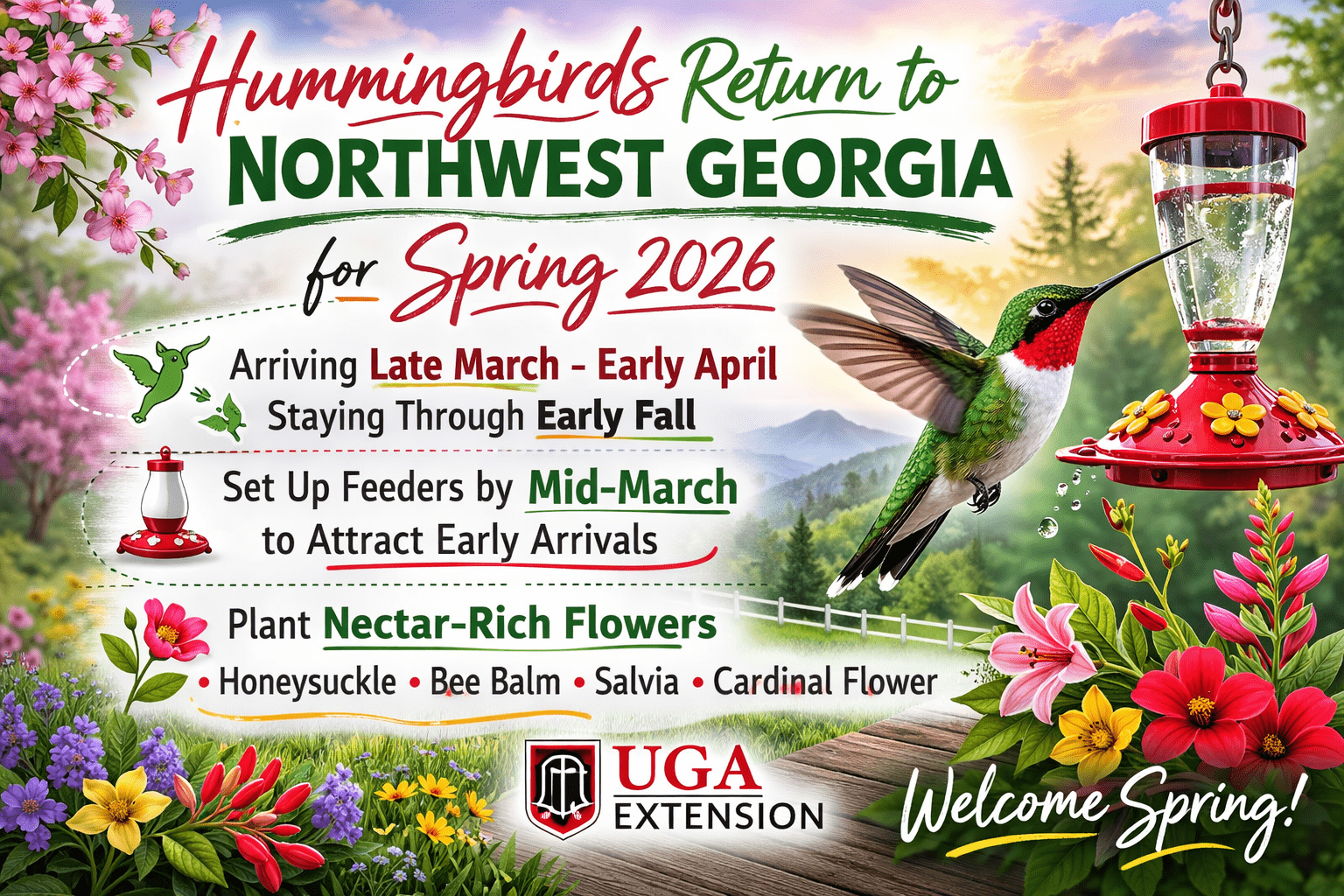
According to UGA Extension, ruby-throated hummingbirds — the only species known to nest in Georgia — typically arrive in Northwest Georgia from late March to early April and remain through early fall. Males usually arrive first to establish feeding territories, with females following soon after as trees leaf out and flowers begin to bloom.
UGA Extension recommends placing feeders outside by mid-March to help attract early arrivals. Occasionally, early migratory species such as the Rufous hummingbird may pass through Georgia in late winter or very early spring. Providing nectar early ensures these travelers have a reliable food source as they refuel during migration.
Experts advise using a simple nectar solution made of one part white granulated sugar to four parts water, boiled and cooled before filling feeders. Red dye is not necessary and is discouraged. Feeders should be cleaned every few days — more frequently in warmer weather — to prevent mold and fermentation that could harm the birds.
In addition to feeders, planting native nectar-rich flowers can create a welcoming habitat. Popular hummingbird-friendly plants in Northwest Georgia include trumpet honeysuckle, bee balm, salvia, cardinal flower, coral honeysuckle, and native columbine. These plants not only provide food but also support local pollinators and biodiversity.
Hummingbirds are remarkable migrants. Some make nonstop flights across the Gulf of Mexico, traveling hundreds of miles in a single stretch. Despite weighing less than a nickel, they beat their wings up to 50 times per second and can consume up to twice their body weight in nectar and insects each day.
Residents across Chattooga County often enjoy watching hummingbirds hover at feeders, dart between blooms, and defend their favorite feeding spots throughout spring and summer. By early fall, most will begin their southbound migration again, marking the close of another seasonal cycle.
For many in Northwest Georgia, the return of hummingbirds is more than just a wildlife event — it’s a welcome reminder that warmer days and blooming landscapes are just ahead.
Comments