










Chattooga County’s unemployment rate increased slightly in September, according to the latest county-level employment figures released by the Georgia Department of Labor.

Home sales slowed in Chattooga County during September compared with the same month last year, even as the average selling price increased and prospective buyers continued to see a growing selection of available properties.
Northwest Georgia added workers during August, with both the regional labor force and the number of people employed reaching all-time highs, according to new figures from the Georgia Department of Labor.

The cost of living is becoming an increasingly important issue for Chattooga County households as residents face higher prices for several basic necessities — particularly gasoline, diesel fuel and groceries.

Georgia motorists are paying considerably more at the pump as rising crude oil prices continue to push gasoline prices higher across the state.

The price posted on a diesel pump may look like a problem primarily for truck drivers, but with diesel now above $6 per gallon in Georgia, the effects could eventually be felt by almost every business — and household — in Chattooga County.
Chattooga County recorded an unemployment rate of 3.8 percent in the latest report from the Georgia Department of Labor, the highest rate among the nine Northwest Georgia counties included in the regional report.

Chattooga County’s unemployment rate edged slightly higher in May, according to newly released figures from the Georgia Department of Labor.
The county posted a jobless rate of 3.8 percent for May, up from 3.7 percent in April. Despite the small monthly increase, the local rate remains relatively low as Georgia continues to report strong employment numbers statewide.
Georgia Labor Commissioner Bárbara Rivera Holmes said May traditionally brings a new wave of workers into the job market as graduates begin looking for employment. She said Georgia’s growing workforce remains one of the reasons companies continue to invest across the state.
Statewide, Georgia has now surpassed 5 million jobs, a milestone labor officials say reflects continued opportunity for both new workers and experienced professionals.
For Chattooga County, the latest numbers show a modest increase in unemployment heading into the summer months, while the overall labor market remains steady.
The housing market in Chattooga County continued to show steady activity during May 2026 as the spring home-buying season remained in full swing across Northwest Georgia.
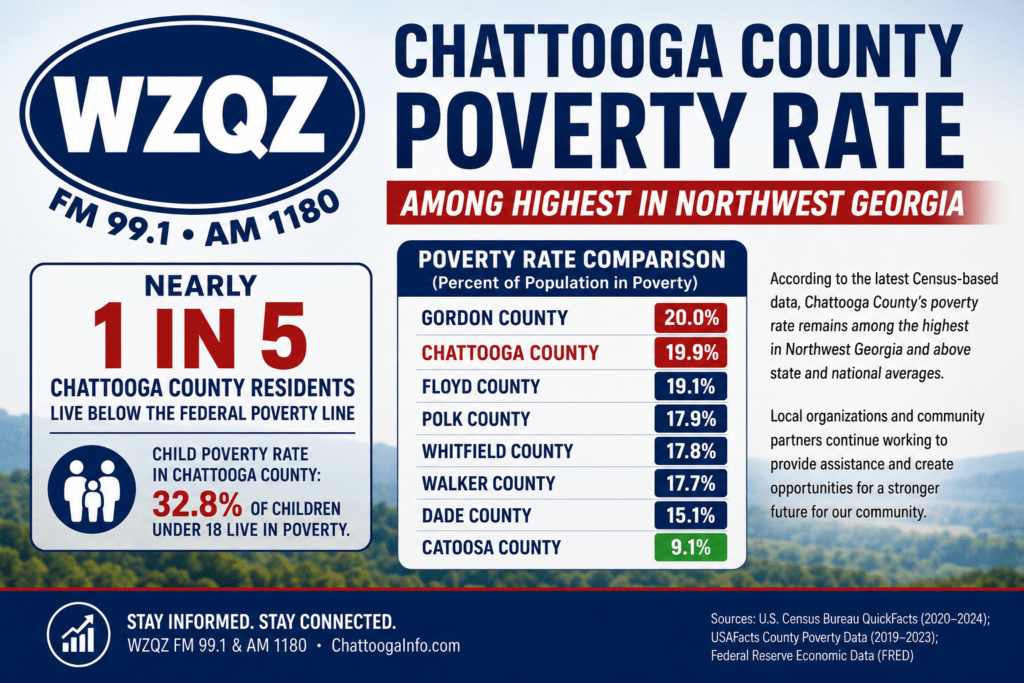
Nearly one out of every five residents in Chattooga County lives below the federal poverty line, giving the county one of the highest poverty rates in Northwest Georgia, according to data from the U.S. Census Bureau and regional economic reports.