










Walker County is one of six Georgia communities selected to receive federal funding for historic preservation work across the state.
The Georgia State Historic Preservation Office, a division of the Georgia Department of Community Affairs, recently announced more than $125,000 in Historic Preservation Fund subgrants.
Walker County will receive $20,180 to complete the third phase of a countywide resurvey of historic resources.
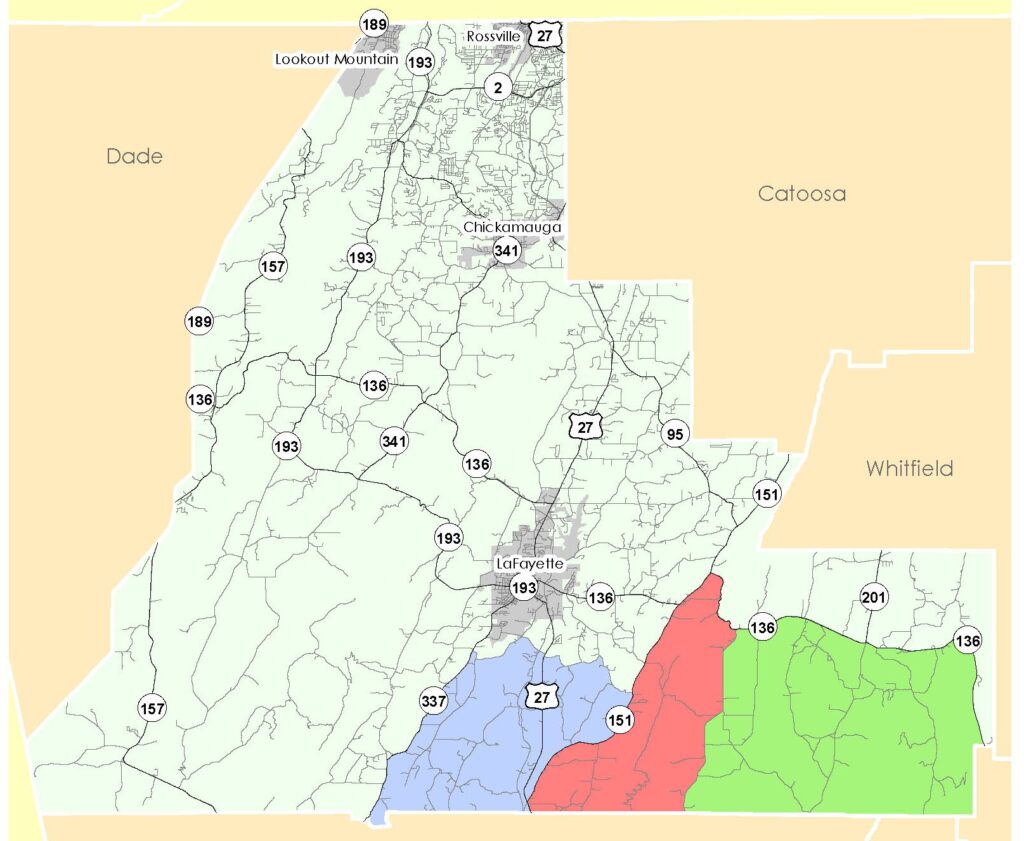
The first phase focused on the southeastern portion of Walker County, while the second phase examined potentially historic resources in the area between Highway 151 and West Armuchee Valley Road.
The third phase will review approximately 523 potentially historic resources, ranging from homes and commercial buildings to community landmarks and agricultural structures.
The survey will also look at other historic features and objects, including water towers, wells, bridges, fortifications, sculptures, monuments and fountains.
The Phase 3 survey area uses State Route 337 as the western boundary northward to its connection with the Trans American Trail. The Trans American Trail serves as the northern boundary, while State Route 151 forms the eastern boundary to its connection with the trail. The southern boundary is the Walker County line.
The work is intended to identify, document and evaluate historic resources that could be important to the county’s history and future preservation efforts.
Walker County is able to participate in the program because it is part of Georgia’s Certified Local Government program.
Each year, Georgia’s 100 Certified Local Governments are eligible to apply for Historic Preservation Fund matching grants. The grants are funded with 60 percent federal money and a 40 percent local match.
To qualify as a Certified Local Government, a city or county must adopt a historic preservation ordinance and establish a historic preservation commission.
Historic Preservation Fund grants can be used for a variety of projects beyond historic resource surveys. Eligible activities include archaeological surveys, design guidelines, publications and certain educational, promotional and tourism-related preservation efforts.
The Walker County project will continue the county’s effort to build a more complete inventory of historic places and structures and provide officials with better information for future planning and preservation decisions.
Comments