










Georgia lawmakers have approved legislation aimed at helping law enforcement officers better handle traffic stops involving people with autism and developmental disabilities.
Georgia lawmakers have approved legislation aimed at helping law enforcement officers better handle traffic stops involving people with autism and developmental disabilities.
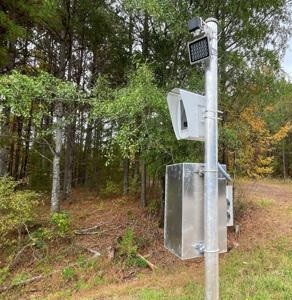
A last-minute bill passed by Georgia lawmakers could bring major changes to how school zone speed cameras operate across the state.
Georgia lawmakers have approved a plan to cut the state’s income tax rate, but a broader effort to overhaul property taxes fell short before the end of the legislative session.
Today is Sine Die at the Georgia State Capitol, the final day of the legislative session when lawmakers must give final approval to bills if they are to become law this year. The term “Sine Die” is Latin for “without a day,” meaning the General Assembly adjourns without setting a date to return for the current session.

State Representative Eddie Lumsden of Armuchee says lawmakers are entering the final stretch of the 2026 legislative session, with just five days remaining after completing Legislative Day 35 last week.
Georgia lawmakers are moving forward with several bills this session aimed at improving child welfare services, supporting foster children with autism and related disorders, and strengthening legal protections for victims of abuse.

State Rep. Eddie Lumsden of Armuchee says education remains the largest area of state spending in the Georgia House’s proposed FY 2027 budget, with major investments focused on early literacy, student screenings, pre-K expansion, and additional support for economically disadvantaged students.
Georgia lawmakers have approved House Bill 1000, a measure that would provide a one-time state income tax rebate for eligible taxpayers, and the bill is now headed to Governor Brian Kemp for his signature.
Under the proposal, taxpayers who filed timely Georgia income tax returns for both the 2024 and 2025 tax years would qualify for the rebate. The bill sets the rebate at $250 for single filers or married people filing separately, $375 for heads of household, and $500 for married couples filing jointly.
The rebate would be funded using part of the state’s budget surplus, which lawmakers say currently stands at around $14 billion.
If signed into law, the measure would mark another round of tax relief for Georgia residents, continuing a series of rebates issued by the state in recent years as lawmakers return surplus revenue to taxpayers.
State Representative Eddie Lumsden of Armuchee says the Georgia House experienced one of the busiest weeks of the 2026 legislative session as lawmakers worked toward Crossover Day, the deadline for bills to pass out of their original chamber in order to remain eligible for final passage before the session ends. By the end of the week, the House had passed 97 bills and resolutions, sending many measures to the Georgia Senate for further consideration.
Several measures that could affect residents in Northwest Georgia are still alive in the Georgia General Assembly after lawmakers met last week’s Crossover Day deadline, one of the most important milestones of the legislative session. Crossover Day marks the point when most bills must pass either the House or Senate in order to continue moving forward this year, and a number of proposals tied to schools, taxes, public safety, and the courts made it through.