










With Georgia’s November 3 General Election now just over six weeks away, Chattooga County voters have several important dates and deadlines coming up for voter registration, absentee ballots and early voting.
With Georgia’s November 3 General Election now just over six weeks away, Chattooga County voters have several important dates and deadlines coming up for voter registration, absentee ballots and early voting.
The Chattooga County Republican Party will hold its September meeting Tuesday, September 22, at 6 PM at the party’s new headquarters in the Hurley Crossing Shopping Center, located at 11264 Highway 27.
U.S. Congressman Clay Fuller, who represents Georgia’s 14th Congressional District, will be the guest speaker. Fuller took office in April following a special election earlier this year.
Party officials say the meeting will include discussion of the upcoming November election and the party’s efforts to encourage voter turnout. Candidate yard signs will also be available at the headquarters for those interested.
The local party is also continuing a fundraiser for its Veteran Wall at the headquarters. Stars are available for $5 each and may be purchased in honor or memory of a veteran. Organizers ask purchasers to provide the veteran’s name, branch of military service and whether the star is being placed in honor or memory.
Information and payments for the Veteran Wall may be mailed to Chattooga County Republican Party, Attn: Veteran Wall, P.O. Box 656, Summerville, GA 30747. Payments may also be made through Cash App at $ChattRepbulican14.
For additional information about the meeting or Veteran Wall project, contact Chattooga County Republican Party Chairwoman Meredith Rosson at 706-331-5547.

Democratic congressional candidate Shawn Harris will make a campaign stop in Chattooga County next week, hosting a town hall meeting in Summerville.

A newly highlighted vulnerability in Georgia’s voting system is raising concerns about whether it may be possible in some circumstances to determine how individual voters cast their ballots.

The Town of Trion is considering having Chattooga County conduct its November 3 election, rather than handling the election in-house.
Mayor Mickey McGraw told the Trion Town Council the move is primarily about saving money. McGraw said the town had not yet received written cost figures from the county, but early indications were that having Chattooga County run the election would be less expensive than Trion conducting it itself.
The council gave the first reading of an ordinance that would authorize Chattooga County to conduct the November 3 election. A second reading is expected in September before the measure can be finalized.
Town Clerk Missy Duncan clarified that the discussion is not tied to any council or school board races for re-election.
One council member also asked for confirmation that the Trion City School bond question had already been approved for placement on the November ballot. Duncan confirmed that it had.
McGraw said he would also speak with the Trion City School Board about helping with the cost of the election.
The town is now waiting for more detailed cost information from Chattooga County before moving forward with the arrangement.

U.S. Senator Raphael Warnock is calling for a statewide moratorium on new data center construction in Georgia, saying large projects should not move forward until protections are in place for local residents.
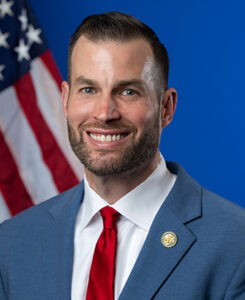
Residents planning to meet with Congressman Clay Fuller’s staff in Chattooga County this Friday should be aware of a change in location for the congressman’s County Connections Program.
The event will now be held at Summerville City Hall, 120 Georgia Avenue in Summerville, on Friday, September 4, from 9 AM until noon.
The original location announced for the Chattooga County stop was the Hurley Community Development Center on Commerce Street.
Fuller’s office recently launched the County Connections Program, a rotating series of in-person office hours designed to make congressional constituent services more accessible in counties that do not have a permanent congressional field office.
Fuller maintains district offices in Rome, Dalton and Dallas, but Georgia’s 14th Congressional District covers a large portion of Northwest Georgia. Through County Connections, members of the congressman’s staff are visiting additional counties on a rotating basis.
The program can be particularly useful for residents who need assistance dealing with a federal agency. Congressional staff can help constituents communicate with federal agencies, check the status of cases and inquiries, and help ensure constituent concerns receive appropriate consideration.
Residents can also meet with Fuller’s staff to discuss issues affecting the community, ask questions or provide comments for the congressman’s office.
The County Connections rotation began August 28 in Walker County. Following Friday’s Chattooga County stop, visits are scheduled for Dade County on September 11, Murray County on September 18, Catoosa County on September 25, Polk County on October 2 and the City of Acworth in Cobb County on October 9.
Again, the location for Friday’s Chattooga County County Connections event has changed. Congressman Clay Fuller’s staff will be at Summerville City Hall, 120 Georgia Avenue, from 9 AM until noon Friday, September 4.

The race for Georgia House District 12 is set for November, with incumbent Republican Eddie Lumsden of Armuchee facing Democratic challenger Holly Chaney of Trion and the latest campaign finance reports showing a substantial difference in the amount of money available to the two campaigns.

State Sen. Chuck Hufstetler of Rome has been honored by the Association County Commissioners of Georgia with a 2026 Legislative Service Award for his work with county governments during this year’s legislative session.

Ben Jones, the actor who became a television icon as mechanic Cooter Davenport on “The Dukes of Hazzard” before going on to represent Georgia in the U.S. House of Representatives, has died. He was 84.