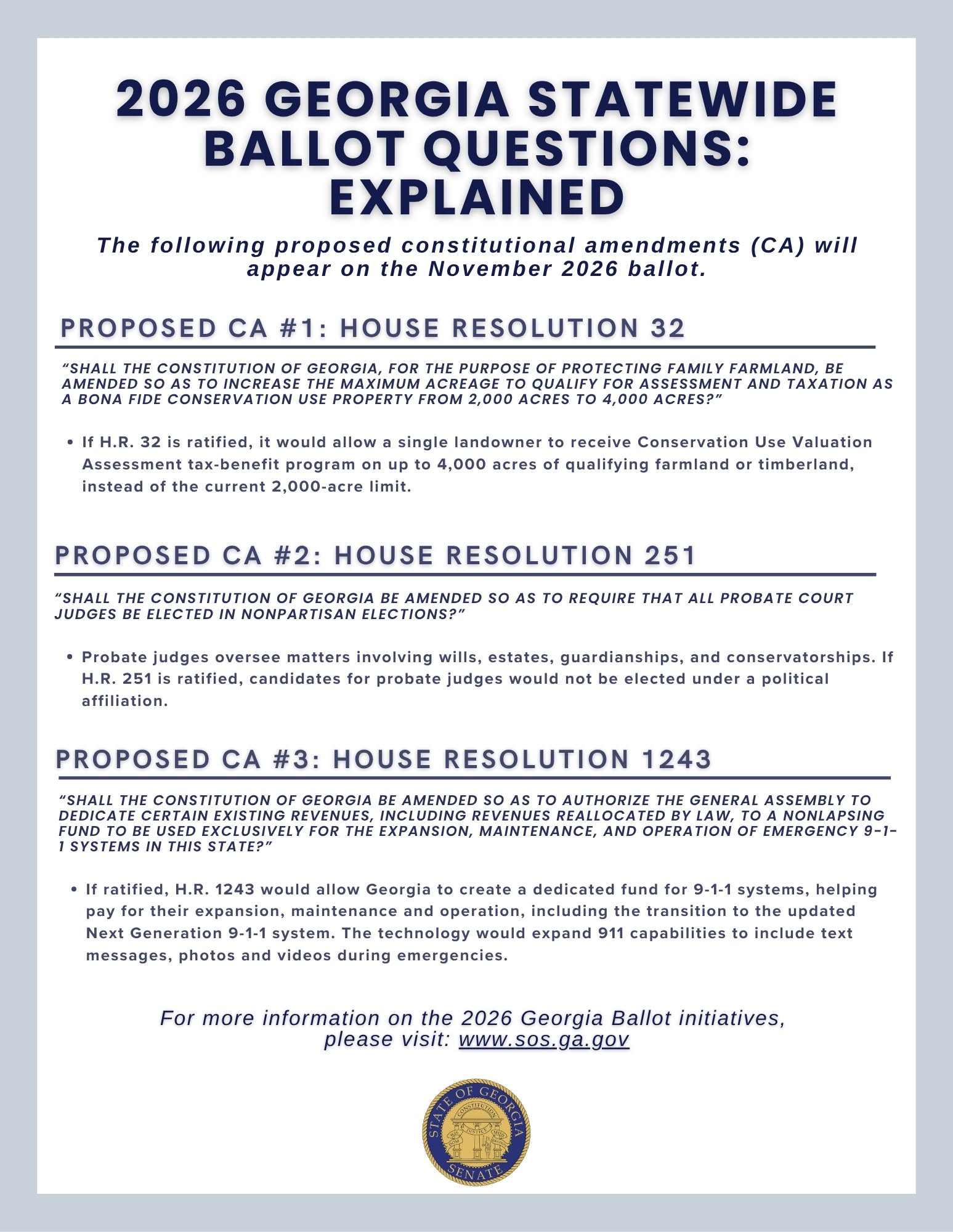











Georgia lawmakers worked down to the final hours on Crossover Day, one of the most important deadlines of the legislative session, as they rushed to move bills through the House and Senate before time ran out.
A bipartisan measure moving through the Georgia General Assembly would eliminate the state’s 4% sales tax on diapers, baby formula, and menstrual products, classifying them as essential goods rather than taxable items. Supporters say the change would ease financial pressure on families, noting that while groceries and prescription drugs are already exempt in Georgia, diaper and feminine hygiene products are not.
Advocates point to long-term costs, with estimates showing the average woman spends about $18,000 on period products over her lifetime — plus roughly $1,000 in taxes. Government assistance programs like SNAP and WIC do not cover diapers, and the Georgia Diaper Bank Coalition estimates ending the diaper tax could save families about $80 per child. Diaper banks statewide distribute more than 1.4 million diapers each year to families in need.
The effort is being led this session by Republican State Sen. Randy Robertson, who says the issue is about prioritizing families despite the potential loss of millions in state revenue. The bill must pass committee before heading to the Senate floor ahead of Crossover Day, and supporters say it has bipartisan backing. If approved, Georgia would join a growing number of states that have eliminated sales taxes on menstrual and baby care products.
The Coosa River Basin Initiative is keeping lines of communication open with local legislators on several water-related issues during the 2026 session of the Georgia General Assembly.
State Rep. Eddie Lumsden (R–Armuchee) says the Georgia House returned to Atlanta on January 12 to open the 2026 legislative session, beginning the second regular session of the 158th General Assembly. Lumsden noted the week included recognition of the newly restored House Chamber and adoption of the session calendar, with the 40-day session scheduled to end April 2, known as Sine Die. He also highlighted Governor Brian Kemp’s priorities shared at the Georgia Chamber’s Eggs & Issues Breakfast, including transportation spending proposals, a one-time natural gas infrastructure fund, and a Homeless Response Grant tied to preparations for the 2026 FIFA World Cup in Atlanta. Lumsden said Kemp’s final State of the State Address focused on tax relief, cost-of-living issues, education and workforce training, school safety, and public safety priorities, including efforts to combat human trafficking and gang-related crime. The week concluded with a Celebration of Service honoring Dr. Martin Luther King Jr., and Lumsden said lawmakers returned after the holiday for “budget week,” when agencies outline funding needs to appropriations committees. You can see the complete legislative report below:
Governor Brian Kemp used his final State of the State address last week to roll out his recommendations for Georgia’s amended Fiscal Year 2026 budget and the Fiscal Year 2027 budget, calling for major investments aimed at affordability, student opportunity, workforce development, and public higher education.
Gov. Brian Kemp delivered his final State of the State address this week at the Georgia Capitol, using the annual speech to lay out what he wants lawmakers to prioritize as he enters the home stretch of his second term. In front of a joint session of the General Assembly, Kemp struck an upbeat tone about Georgia’s economy and growth, while arguing the next set of decisions should center on affordability for families, long-term competitiveness for the state, and keeping Georgia “open for business” in a changing national landscape.
Georgia’s official state song reaches a major milestone on January 1, 2026, when the original 1930 music and lyrics of “Georgia on My Mind” enter the public domain. That means the underlying composition—its sheet music and words—can be legally reused, reprinted, performed, and adapted without needing permission.
After months of emotional debate and negotiation, Georgia lawmakers have given final approval to House Bill 268, a comprehensive school safety bill prompted by the tragic shooting at Apalachee High School on September 4th. The bill now heads to Governor Brian Kemp for his signature or veto. The legislation aims to improve communication and mental health support within school districts, while also implementing stricter safety protocols. It mandates police reporting to schools when a child threatens violence, facilitates quicker student record transfers, establishes a statewide anonymous reporting system, requires staff to wear panic buttons, and mandates the annual submission of electronic campus maps to relevant agencies. A contentious student-tracking database was scaled back, but the Georgia Emergency Management and Homeland Security Agency (GEMA) will create a statewide alert system for students who have threatened or committed violence at school after an investigation. The bill also toughens legal consequences for students aged 13 to 16 charged with violent crimes at school. While lawmakers express relief and necessity for the bill, concerns remain about potential misuse and the lack of guaranteed funding for the alert system’s implementation. Discussions about funding, with the House proposing $25 million and the Senate yet to agree, will continue in the coming days.
State Representative Eddie Lumsden (R-Armuchee) shared his weekly report for the 11th week of the legislative session. As the Sine Die deadline approaches, lawmakers are focused on passing many bills, including those on chronic absenteeism, support for foster youth, and tougher penalties for fentanyl trafficking. “We returned to the Capitol determined to provide meaningful solutions for our communities,” said Rep. Lumsden, noting significant progress on issues affecting the state, from helping students to protecting citizens from fentanyl dangers. One important bill passed this week was Senate Bill 123, which addresses chronic absenteeism in public schools by defining it, introducing strategies to improve attendance, and focusing on support for struggling students. Lawmakers also approved Senate Bill 85, which establishes the Georgia Foster Care Scholarship Act to assist current and former foster youth with higher education costs. The House passed Senate Bill 72, providing a legal safe harbor for hospitals offering specialized care for individuals with rare diseases. Additionally, Senate Bill 42 and Senate Bill 79 were passed to address crime involving minors and strengthen penalties for fentanyl trafficking. Other bills, including those on electronic device bans in schools and tax reductions, have also passed and are awaiting the Governor’s decision. As the session ends, lawmakers are finalizing key legislation to meet the needs of Georgia’s citizens. You can read Rep. Lumsden’s complete report below: