










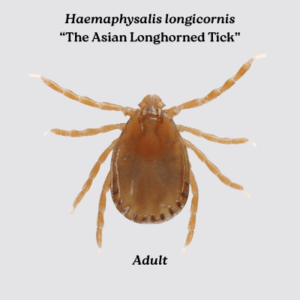
Agriculture and animal health officials in Georgia and Alabama are urging livestock owners, pet owners, and outdoor enthusiasts to be on alert after the Asian Longhorned Tick was confirmed in multiple counties across the region.
According to the Georgia Department of Agriculture, the tick has been confirmed in Floyd, Habersham, Hall, Pickens, and White counties. Alabama animal health officials also recently confirmed the tick in DeKalb County after it was identified on a stray dog.
The Asian Longhorned Tick is native to eastern Asia and was first confirmed in the United States in New Jersey in 2017. Since then, it has continued spreading across parts of the eastern U.S. The tick can feed on livestock, wildlife, pets, and humans, spending part of its lifecycle on animals and part in the environment.
Officials say one major concern is how quickly the tick can reproduce. Female Asian Longhorned Ticks can lay between 1,000 and 2,000 eggs at a time without mating, allowing infestations to grow rapidly once established.
Although the tick is smaller than many common tick species, heavy infestations can cause serious problems for animals. Possible concerns include blood loss, anemia, fever, lethargy, loss of appetite, stress, reduced productivity, and possible disease transmission.
Livestock producers are especially being encouraged to monitor herds closely because the tick is associated with the transmission of Theileriosis in cattle. The disease can cause severe illness, reduced milk production, abortions, and other health concerns. Veterinarians say Theileriosis was not considered a major concern in the U.S. until recent years, and there is currently no cure for the disease.
Officials also note there is no known way to fully eradicate the Asian Longhorned Tick once it becomes established in an area, making early detection and management especially important.
The Georgia Department of Agriculture, Extension personnel, and veterinarians recommend wearing long pants, socks, and closed-toe shoes in tick-prone areas, routinely checking cattle, horses, sheep, goats, pets, and people for ticks, and removing ticks as soon as they are found.
Livestock owners are encouraged to work with their veterinarian and local extension office on a tick management plan. Maintaining pastures through mowing, fencing, and environmental management can also help reduce tick habitat. Officials say many approved flea and tick prevention products, including common permethrin-based products, remain effective against the Asian Longhorned Tick.
Anyone who notices unusually large numbers of ticks on an animal should contact a veterinarian immediately, collect tick samples in rubbing alcohol inside a sealed jar or plastic bag, and report the findings to the State Veterinarian’s Office.
Georgia and Alabama officials say continued monitoring, routine inspections, and prompt reporting will be important in protecting livestock, pets, and communities as the Asian Longhorned Tick continues to spread.
Comments