










The cost of living is becoming an increasingly important issue for Chattooga County households as residents face higher prices for several basic necessities — particularly gasoline, diesel fuel and groceries.
The cost of living is becoming an increasingly important issue for Chattooga County households as residents face higher prices for several basic necessities — particularly gasoline, diesel fuel and groceries.

Georgia could receive nearly $135 million under a landmark multistate settlement with Meta Platforms that will also bring major changes to how children and teenagers use Facebook and Instagram.

Georgia continues to have a significant need for families willing to open their homes to children in foster care, and residents of Chattooga County who have considered becoming foster parents are encouraged to learn more about the process through the local Division of Family and Children Services office.

Georgia families will be able to save substantially more for future education expenses under two major changes to the state’s Path2College 529 Plan.

Georgia households are paying significantly more to keep the lights on than they were just six years ago, as a series of rate increases and higher energy costs continue to push electric bills upward.

U.S. Senator Jon Ossoff says a bipartisan housing bill approved by Congress includes provisions designed to crack down on large corporations buying up single-family homes and driving up housing costs for families in Georgia.

Health insurance costs continue to put pressure on family budgets in Georgia, and even when premiums are not the highest in the country, many households here still feel the strain more sharply than families in other states. Nationally, the average annual premium for employer-sponsored family coverage reached $26,993 in 2025, with workers paying an average of $6,850 of that total out of pocket. At the same time, workers’ wages rose 4% while family premiums rose 6%, meaning insurance costs are still growing faster than paychecks.
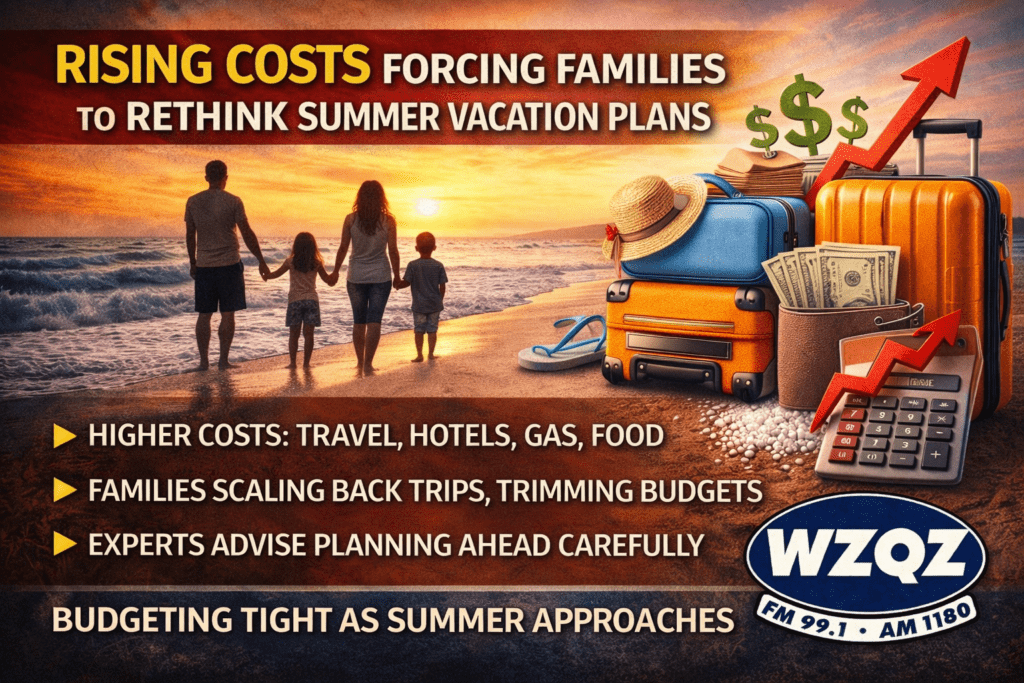
As summer approaches, many families across Georgia are reworking their vacation plans as rising costs continue to strain household budgets.

State Sen. Chuck Hufstetler, R-Rome, says rising housing costs are one of the biggest threats facing Georgia families and argues that lawmakers must act to protect homeownership opportunities across the state.

State Representative Eddie Lumsden of Armuchee says the Georgia House experienced one of the busiest weeks of the 2026 legislative session as lawmakers worked toward Crossover Day, the deadline for bills to pass out of their original chamber in order to remain eligible for final passage before the session ends. By the end of the week, the House had passed 97 bills and resolutions, sending many measures to the Georgia Senate for further consideration.