










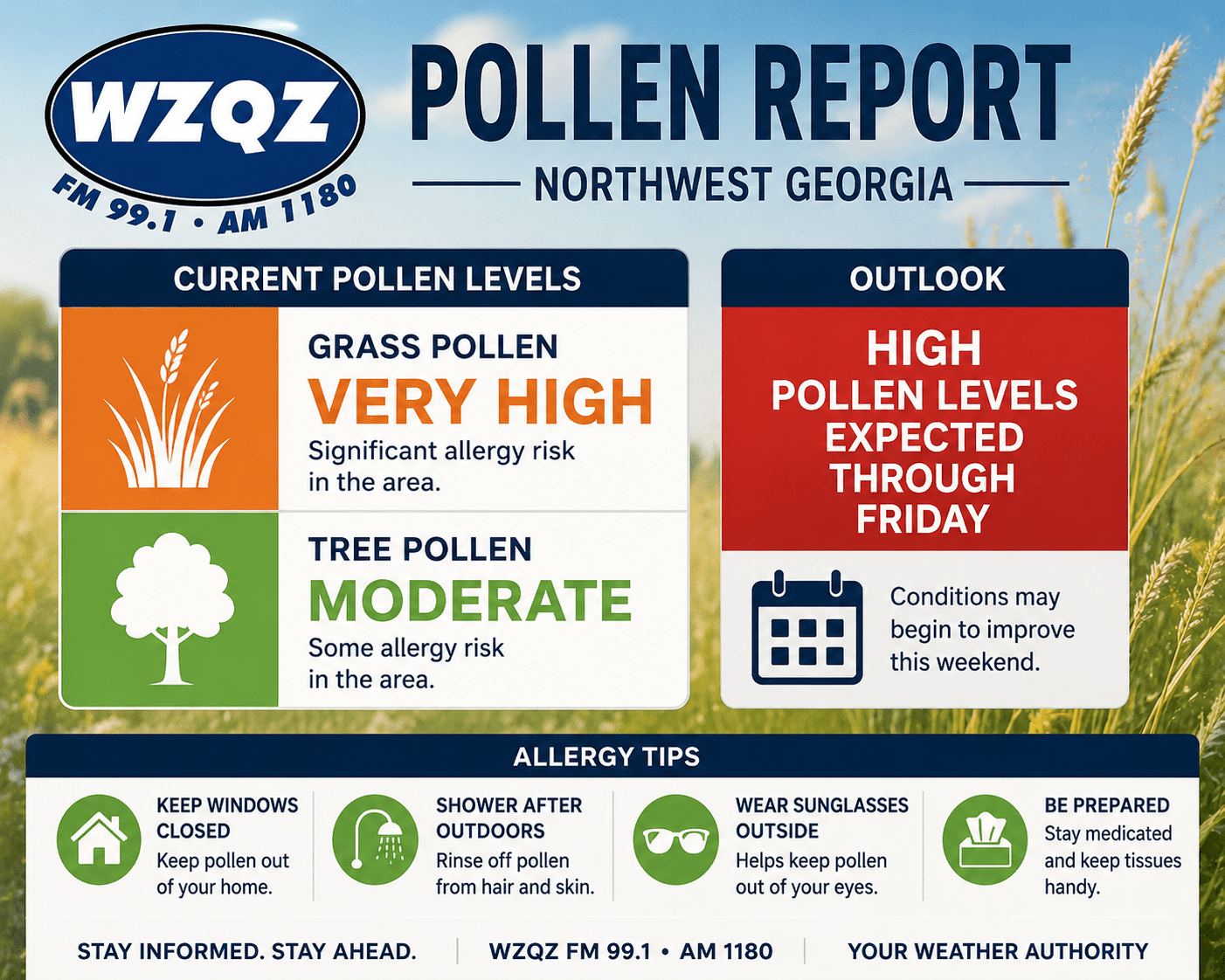
Pollen Extremely High Across Northwest Georgia

Allergy sufferers across Northwest Georgia are dealing with very high grass pollen levels today, creating a significant allergy risk throughout the area. Forecasters say the elevated pollen counts are expected to remain high through Friday.

Tree pollen levels are currently listed as moderate, but the high concentration of grass pollen is likely to trigger symptoms for many residents, including sneezing, itchy eyes, congestion, and headaches.

Recent warm temperatures combined with spring growth have helped fuel the increase in pollen across the region. Dry conditions and breezy weather can also allow pollen to spread more easily through the air.

Health experts recommend limiting outdoor activity during peak afternoon hours, keeping windows closed, showering after spending time outside, and taking allergy medications as directed.

Conditions could begin to improve later this weekend as increased rain chances move back into Northwest Georgia.
Heavy Pollen Continues To Blanket Chattooga County

Spring allergy season is in full force across Northwest Georgia, with high pollen levels continuing to impact residents in Chattooga County.

Read more

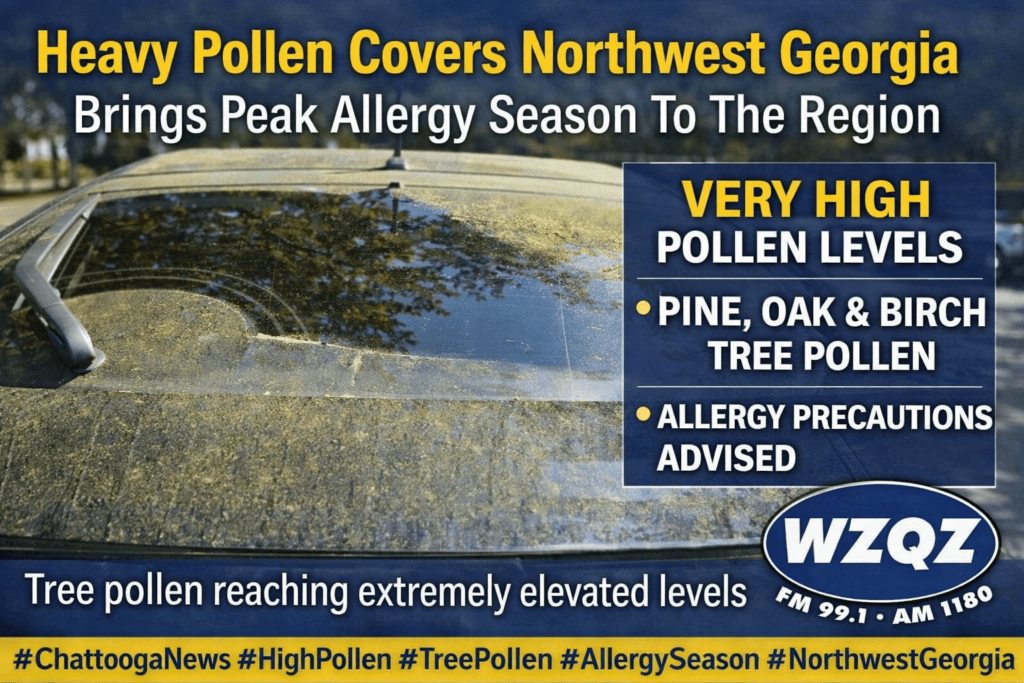
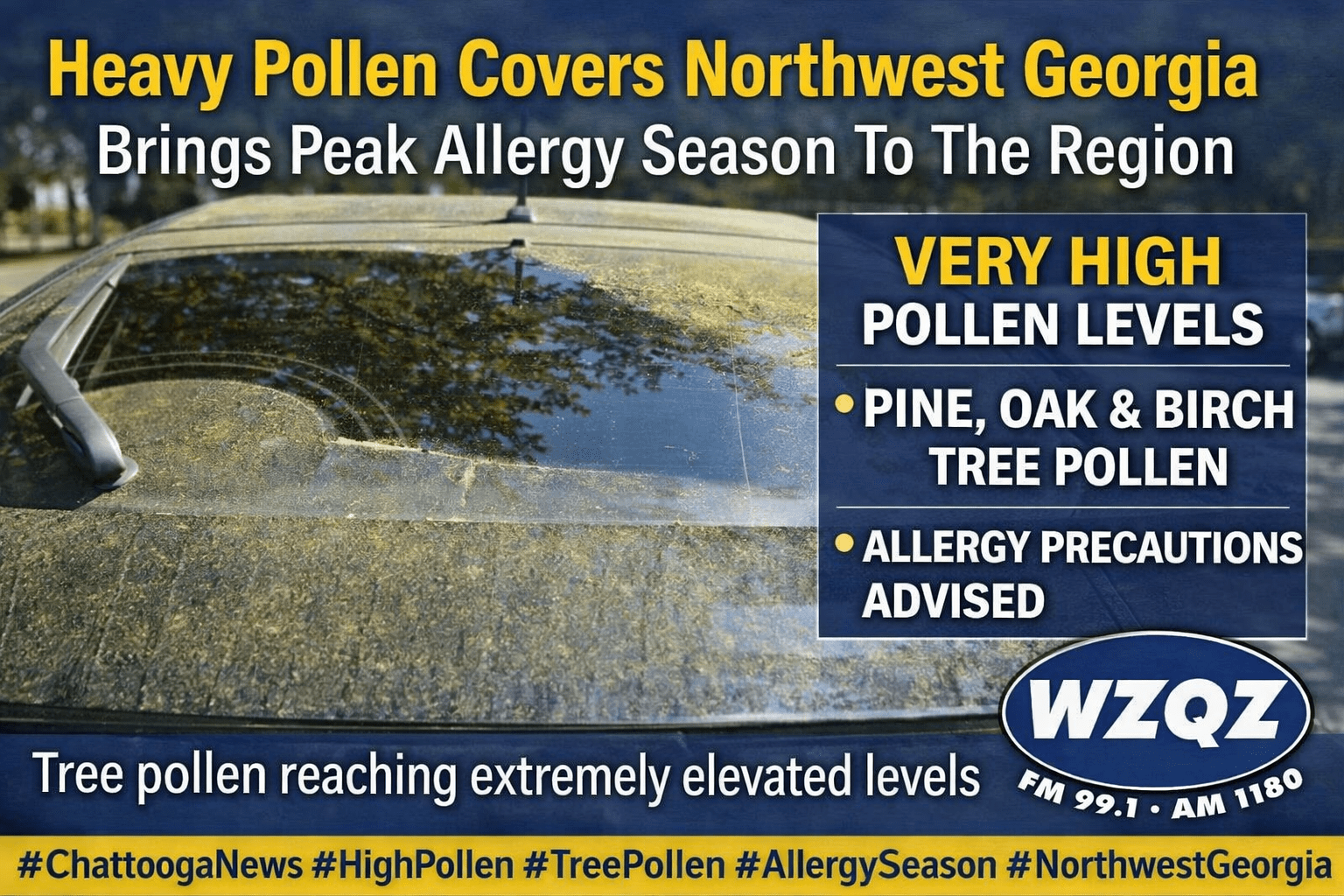
Heavy Pollen Covers Northwest Georgia, Brings Peak Allergy Season To The Region

If your car looks yellow this week, you’re definitely not imagining it. Pollen levels across Chattooga County and Northwest Georgia are currently very high, with tree pollen reaching peak levels in late March and leaving a visible coating on cars, porches, patios, and outdoor furniture.

Read more

Atrium Health Floyd Offers Tips as Spring Allergy Season Begins

As plants begin a new season of growth and bloom, health care providers at Atrium Health Floyd are reminding residents that rising tree pollen levels can trigger seasonal allergy symptoms and are encouraging people to take steps now to stay comfortable.

Doctors say seasonal allergic rhinitis, more commonly known as hay fever, is often caused by tree pollen as spring approaches. Common symptoms include sneezing, nasal congestion, runny nose, an itchy nose or throat, and itchy or watery eyes.

Health experts note that allergy symptoms can become worse on dry, windy days, when pollen levels tend to be at their highest. Residents who struggle with spring allergies are encouraged to monitor pollen levels and take preventive measures to reduce exposure and manage symptoms.