











There was a time when the arrival of autumn in Chattooga County meant more than cooler weather and changing leaves. It meant cotton-picking season, when farmers worked long hours bringing in a crop that was once the backbone of the county’s agricultural economy.
From the early days of Chattooga County in the 1800s through much of the first half of the 20th century, cotton was one of the most important sources of income for local farm families.
According to research by the Chattooga County Historical Society, cotton dominated local agriculture from the time the county was established in 1838. By the early 1900s, agricultural agents were encouraging farmers to diversify their crops rather than depend so heavily on cotton.
The Cotton Gin Was An Important Part Of Rural Life
Before cotton could be sold, its seeds had to be separated from the valuable fibers. That was the job of the cotton gin.
Farmers hauled their harvested cotton to local gins, where machinery separated the seeds from the cotton fibers. The cotton was then compressed into bales for shipment to market.
During the fall harvest, cotton gins were busy places. Wagons, and later trucks, brought cotton from surrounding farms. The machinery created a constant rumble, while cotton lint and dust filled the air.
For many farmers, the gin was also a gathering place where neighbors exchanged news, discussed crop conditions and talked about cotton prices.
Thousands Of Bales Produced In Chattooga County
Historical records show just how important cotton production once was to the local economy.
According to U.S. Census Bureau cotton-ginning statistics, Chattooga County produced 6,772 bales of cotton in 1900.
The following year, the county’s production increased to 7,517 bales, according to federal records.
Those figures represent thousands of acres of farmland and an enormous amount of labor during the annual harvest.
Cotton production remained important for decades.
An article published in The Summerville News on November 15, 1928, reported that the cotton gin in Lyerly had already processed 1,459 bales that season.
That was an increase of 230 bales over the 1,229 processed by the same date the previous year, even though ginning operations had started about three weeks later.
The figures offer a glimpse of just how busy a single community cotton gin could be during harvest season.
From Cotton Fields To Textile Mills
Cotton was important not only to Chattooga County farmers but also to the development of local manufacturing.
The Trion Factory, established in the 1840s, became one of Northwest Georgia’s earliest cotton textile mills. Other mills later operated in Berryton and Summerville.
While cotton gins separated seeds from raw cotton, textile mills took the cleaned fibers and turned them into yarn and cloth.
Together, cotton farming, ginning and textile manufacturing helped shape the economy of Chattooga County for generations.
The Hurley Family Continues Chattooga County’s Cotton Farming Tradition
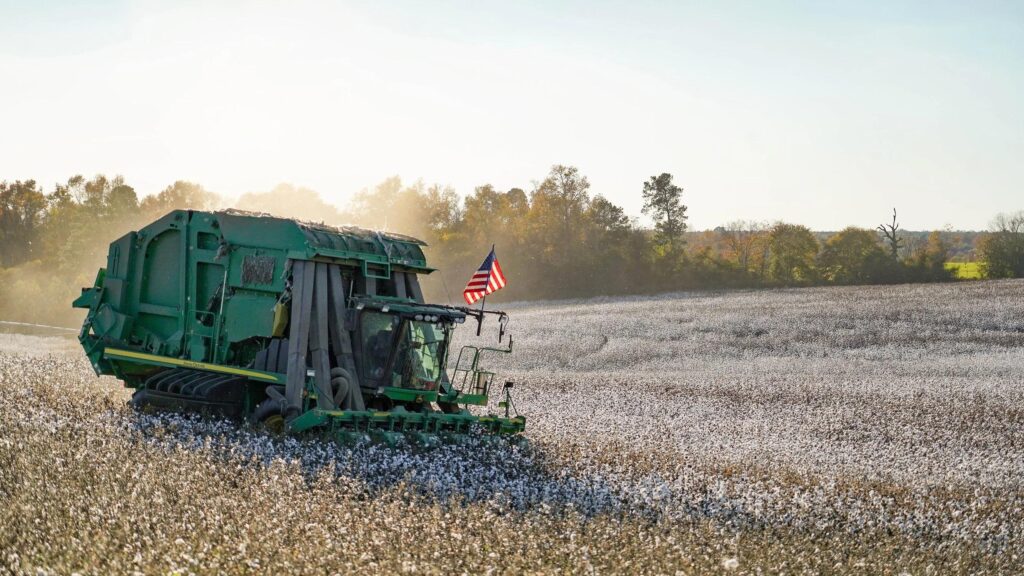
Although cotton production has declined considerably from its peak in Chattooga County, the crop has not disappeared from the local agricultural landscape.
Today, Greg Hurley and his son, Garrett Hurley, continue growing cotton in Chattooga County through their family farming operation, Double GH Farms.
The Hurley family’s farming roots stretch back five generations, with the family working land in the Summerville and Lyerly areas for decades.
Greg’s father, James “Bo” Hurley, and his uncle, Wayne Hurley, helped develop the farming operation after returning from military service.
During the 1970s, the family diversified its cotton, corn and cattle operation by adding Bermudagrass production. The business eventually expanded into a custom sprigging operation serving Northwest Georgia, Northeast Alabama and southern Tennessee.
Greg later joined his uncle Wayne in managing the farm, and Garrett grew up working alongside them.
Following Wayne’s death in 2021, Greg and Garrett established Double GH Farms LLC.
Today, the family operation includes cotton, corn, soybeans, cattle and hay production.
Cotton Patch Day Keeps The Tradition Alive
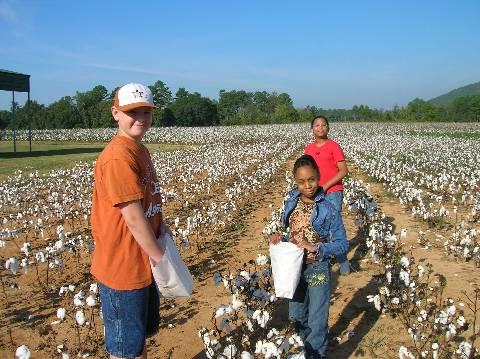
One of the ways the Hurley family continues to preserve Chattooga County’s agricultural heritage is through Cotton Patch Day, an annual educational event they continue to host for local schoolchildren.
During Cotton Patch Day, students visit the Hurley farm to learn firsthand about cotton production, from planting and harvesting to the ginning process and the many products made from cotton.
Students have opportunities to see modern cotton-picking equipment and learn how farming has changed over the generations.
The event also introduces young people to the importance of agriculture in their own community and the role cotton played in the development of Chattooga County.
A 2016 report about Cotton Patch Day recalled how Wayne Hurley’s father once gathered dozens of workers to pick cotton by hand during the fall harvest.
Today, modern cotton harvesters can accomplish in a fraction of the time what once required large crews of workers.
By continuing to host Cotton Patch Day, Greg and Garrett Hurley are helping ensure that another generation of Chattooga County children understands the agricultural traditions that helped build their community.
The Hurleys’ Agricultural Leadership Extends Beyond Chattooga County
The Hurley family’s contributions to agriculture extend well beyond their own farm.
Garrett Hurley is serving as the 2026 chairman of the Georgia Farm Bureau Young Farmers & Ranchers Committee, a statewide leadership position focused on supporting and developing the next generation of Georgia farmers.
Greg Hurley also serves as a supervisor for the Coosa River Soil and Water Conservation District, which works to promote responsible land and water management.
Their involvement reflects a commitment not only to continuing their family’s farming tradition but also to supporting agriculture throughout Northwest Georgia.
A Changing Way Of Life
Cotton farming required tremendous amounts of labor, particularly before mechanical cotton pickers became common.
Families often worked together in the fields, and hired agricultural laborers also played an important role in bringing in the crop. Before the Civil War, cotton production in Georgia depended heavily on enslaved labor. In the decades that followed, tenant farming and sharecropping became important parts of the agricultural economy.
Over time, mechanization, changing agricultural markets and the movement of workers into industrial jobs transformed farming throughout Northwest Georgia.
As cotton acreage declined, the once-familiar cotton gins gradually disappeared from many rural communities.
Today, the old cotton fields and gins are part of Chattooga County’s agricultural history, but their influence remains.
For generations of local families, cotton was more than a crop. It helped pay the bills, supported local businesses and shaped the rhythm of life from spring planting through the fall harvest.
And thanks to farming families like the Hurleys, who continue growing cotton and sharing that tradition through Cotton Patch Day, cotton remains a living part of Chattooga County’s agricultural heritage rather than simply a chapter in its history.
Sources:
-
Chattooga County Historical Society — Bob Baker’s 10 Events That Shaped Chattooga’s History
-
U.S. Census Bureau — Historical Cotton Ginning Statistics
-
The Summerville News, November 15, 1928
-
Magnolia Loom — Double GH Farms Family History
-
AllOnGeorgia — Cotton Patch Day at Hurley Farm, October 13, 2016
-
Georgia Farm Bureau — 2026 Young Farmers & Ranchers Leadership
-
Farm Monitor — Garrett Hurley Profile, June 2026
Comments