









Livestock owners in Chattooga County and across Georgia are being urged to stay alert as the Georgia Department of Agriculture has reinstated enhanced animal-entry requirements following another detection of New World screwworm in New Mexico.

Livestock owners in Chattooga County and across Georgia are being urged to stay alert as the Georgia Department of Agriculture has reinstated enhanced animal-entry requirements following another detection of New World screwworm in New Mexico.
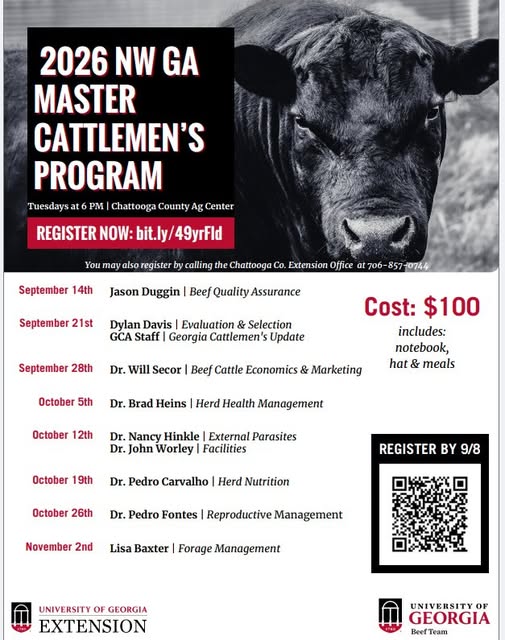
Cattle producers across Northwest Georgia will have an opportunity to expand their knowledge and improve herd management this fall as the University of Georgia Extension brings the 2026 Northwest Georgia Master Cattlemen’s Program to Chattooga County.
The eight-week program begins Monday, September 14, and will meet each Monday at 6 p.m. through November 2 at the Chattooga County Agricultural Center.
Participants will hear from University of Georgia specialists and industry experts on a wide range of topics, including beef quality assurance, herd selection, cattle economics and marketing, herd health management, parasite control, facilities, nutrition, reproductive management and forage management.
The registration fee is $100 and includes a notebook, program hat and meals. Registration is open through September 8.
To register, call the Chattooga County Extension Office at 706-857-0744, scan the QR code on the program flyer or visit bit.ly/49yrFld.
Extension officials say the program is designed for both new and experienced cattle producers looking to strengthen their management skills and improve the profitability of their operations.
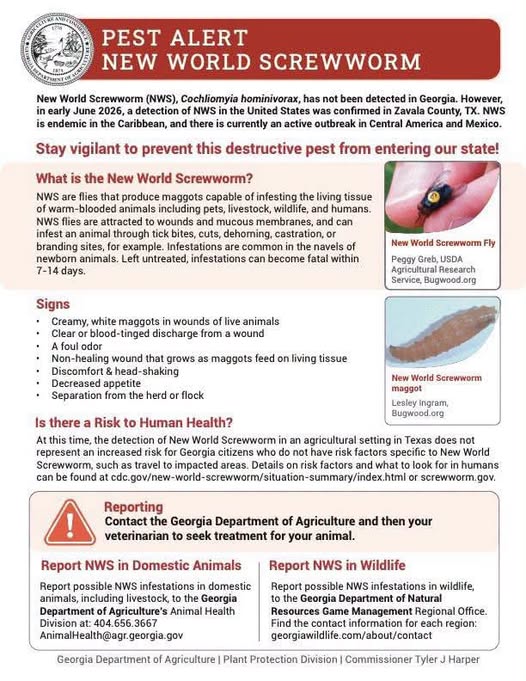
The Georgia Department of Agriculture is urging livestock producers, veterinarians and pet owners to remain alert for signs of the destructive New World Screwworm, even though no cases have been confirmed in Georgia.
With dangerous heat and heat index values climbing above 100 degrees across Northwest Georgia, veterinarians and agricultural experts are urging pet owners and livestock producers to take extra precautions to protect animals from heat-related illness.