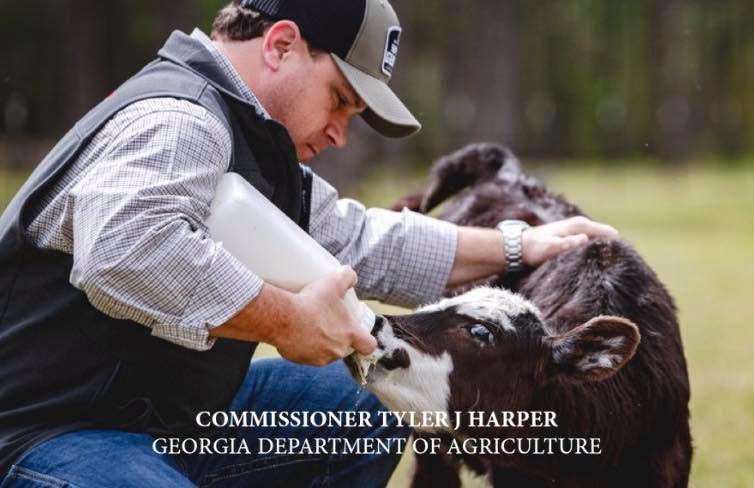










Georgia Agriculture Commissioner Tyler J. Harper is urging federal trade officials to strengthen protections for American specialty crop producers as negotiations continue over the United States-Mexico-Canada Agreement (USMCA).
University of Georgia students are helping Georgia farmers spend less time behind a desk and more time in the field through a new artificial intelligence-powered platform called FieldLog.
The Georgia Department of Agriculture says its Plant Protection team continued efforts in June to track and eradicate the Yellow-Legged Hornet, an invasive species that poses a threat to honeybees and Georgia’s agriculture industry.
According to the department, crews found 125 hornets and eradicated three nests during the month of June.
Agriculture officials say hornet activity increases as temperatures rise. Beekeepers and residents are encouraged to watch for nests and for “hawking” behavior around beehives, where hornets hover near hives and prey on bees.
Anyone who believes they have found a Yellow-Legged Hornet nest in Georgia should contact the Georgia Department of Agriculture at yellow.legged.hornet@agr.georgia.gov.
With dangerous heat and heat index values climbing above 100 degrees across Northwest Georgia, veterinarians and agricultural experts are urging pet owners and livestock producers to take extra precautions to protect animals from heat-related illness.
Georgia is taking steps to slow the loss of farmland as rapid growth continues across the state.
Georgia Agriculture Commissioner Tyler Harper said this week that the Georgia Department of Agriculture is continuing its efforts to track, trap and eradicate the invasive yellow-legged hornet, and he is encouraging residents to help by watching for signs of the destructive insect.
Harper is asking Georgians to be on the lookout for possible secondary nests and to report any suspected sightings to the state.
Residents should watch for hornet activity around beehives, especially during the morning hours before noon and again after 5 PM.
Possible secondary nests may appear as large, round or oval-shaped structures located high in trees or other elevated areas. Officials say the nests are typically gray or brown and made of layered, paper-like material. Depending on temperatures, they may be visible from late summer through winter.
Anyone who believes they have spotted a yellow-legged hornet nest should report the sighting to the Georgia Department of Agriculture by email at yellow.legged.hornet@agr.georgia.gov.
Georgia agriculture leaders are continuing efforts to strengthen the state’s farming industry through new business resources and expanded market opportunities.
Apple farmers in North Georgia are watching the weather closely as a months-long drought raises concerns about the upcoming fall harvest.
In Gilmer County, home to Ellijay — known as the Apple Capital of Georgia — orchard owners say dry conditions are already putting stress on apple trees. Curled leaves, reduced moisture, and weakened tree health could all affect the size and quality of this year’s crop.
Agriculture experts say drought-stressed trees are more vulnerable to disease, fungus, and bacteria. Without enough rainfall, apple trees may produce lower yields and smaller fruit, and in more severe cases, some apples could fall from the trees before harvest.
Farmers say North Georgia has received more rain than some other parts of the state, but several areas remain in severe drought. Growers are hoping for more rain before the fall apple season begins.
Apple picking season in North Georgia traditionally begins around Labor Day weekend and continues through October.
Chattooga County has been named a primary natural disaster area due to ongoing drought conditions, as state and federal officials continue to respond to dry weather impacting Georgia cities and rural communities.
Here is the latest arrest report from the Chattooga County Sheriff’s Office for Thursday, April 23, 2026: