










A new agreement between Georgia Power and Google could eventually provide an estimated $900 million in benefits to Georgia Power customers while increasing the amount of electricity generated by two of the state’s nuclear power plants.

A new agreement between Georgia Power and Google could eventually provide an estimated $900 million in benefits to Georgia Power customers while increasing the amount of electricity generated by two of the state’s nuclear power plants.
A major Georgia Power energy project in Northwest Georgia is nearing completion, with the company preparing to place a 57.5-megawatt battery storage facility in Floyd County into service later this year.

A new report is drawing attention to the number of Georgia Power customers losing electric service for nonpayment as families deal with high summer electricity bills.
Georgia Power says a newly approved contract to provide electricity to OpenAI’s massive data center project in Effingham County will ultimately help lower costs for residential customers, but consumer and environmental advocates say significant questions remain about the unprecedented growth of data centers and how their costs will be tracked.
As data centers continue to expand across Georgia, Georgia Power is pushing back against what company officials describe as misinformation surrounding the massive facilities and their impact on residential electric customers.
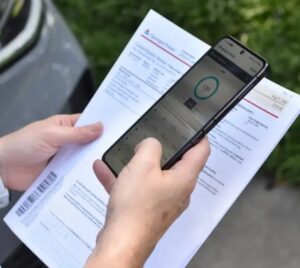
With temperatures pushing into the upper 90s and heat index readings topping 100 degrees across Chattooga County and Northwest Georgia, air conditioners are working overtime — and many households are seeing the consequences when their electric bills arrive.

Georgia Power has announced a new Customer Protection Pledge, saying it is designed to keep electricity affordable while meeting the state’s rapidly growing demand for power from new industries, including data centers and manufacturers.

The Georgia Public Service Commission has voted to move forward with an investigation into whether Georgia Power’s largest electricity customers—including data centers—are paying their fair share of fuel costs or shifting those expenses onto residential and small business customers.
Georgia households are paying significantly more to keep the lights on than they were just six years ago, as a series of rate increases and higher energy costs continue to push electric bills upward.
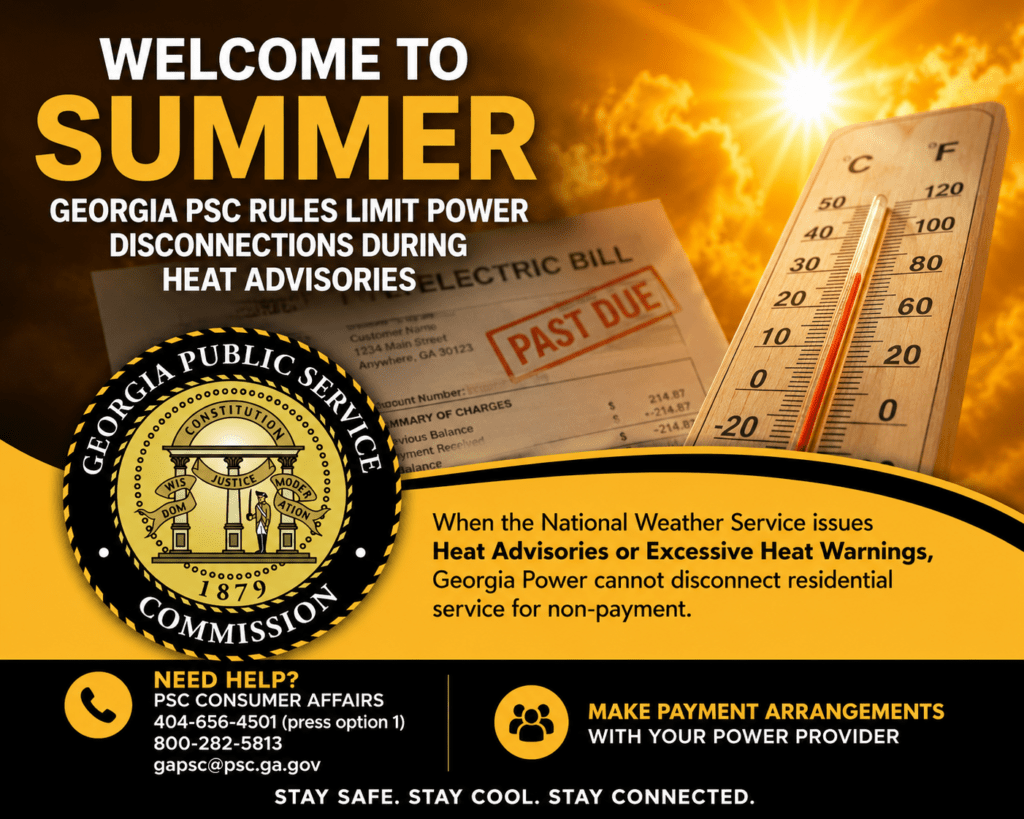
The Georgia Public Service Commission is reminding customers that special rules apply when dangerous summer heat is in the forecast.
Under PSC rules, Georgia Power cannot disconnect electric service to a residential customer for non-payment if a National Weather Service Heat Advisory or Excessive Heat Warning is in effect, or forecast to be in effect, for that customer’s county before 8 a.m. on the scheduled disconnection date.
The rule applies specifically to Georgia Power, which is regulated by the PSC. Customers served by electric membership corporations or municipal electric systems should contact their provider directly to ask about similar policies.
The restriction is temporary. Once the heat advisory or warning ends, disconnection can be reinstated. The PSC encourages customers at risk of losing service to contact their provider and make payment arrangements.
Customers who need help may also contact PSC Consumer Affairs at 404-656-4501, 800-282-5813, or by email at gapsc@psc.ga.gov.